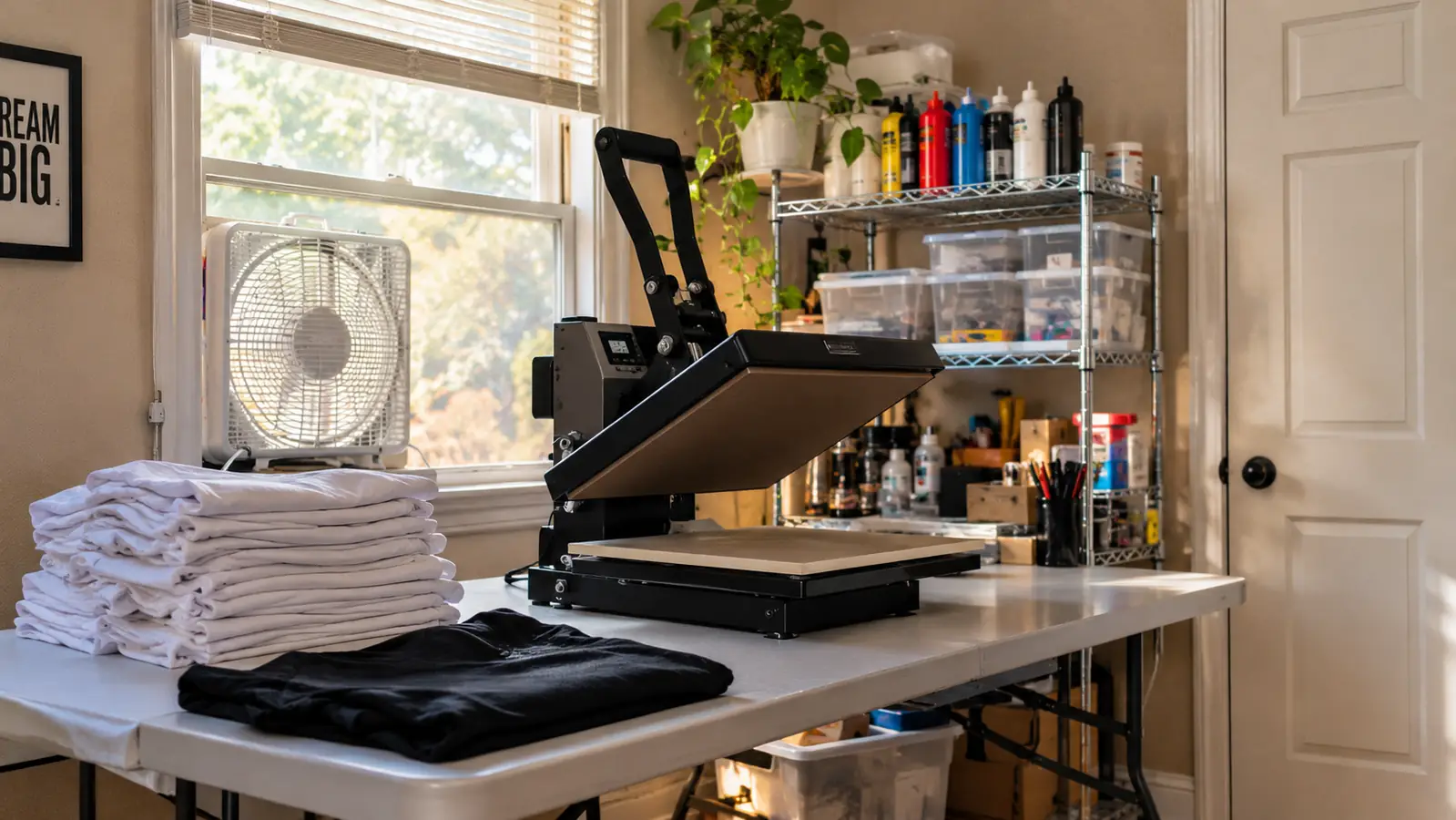
The order was fourteen Little League shirts, names and numbers on the back, sponsor logos on the front, and the first pitch was at noon Saturday. I had a folding table in the spare bedroom, a window fan pointed at the ceiling, and a heat press that had been fighting me since March. All fourteen had to be straight, flat, and cool enough to bag before Sal carried them out to the car.
My old press had a platen smaller than a sheet of notebook paper. A full back print does not fit on that in one pass, so you do it in two, and the second pass always shows you exactly where the first one stopped. A faint line running straight across the numbers. When I lined it up by eye the transfer shifted and I got ghosting. I threw away four shirts in March and told myself I would get better at it. I did not get better at it.
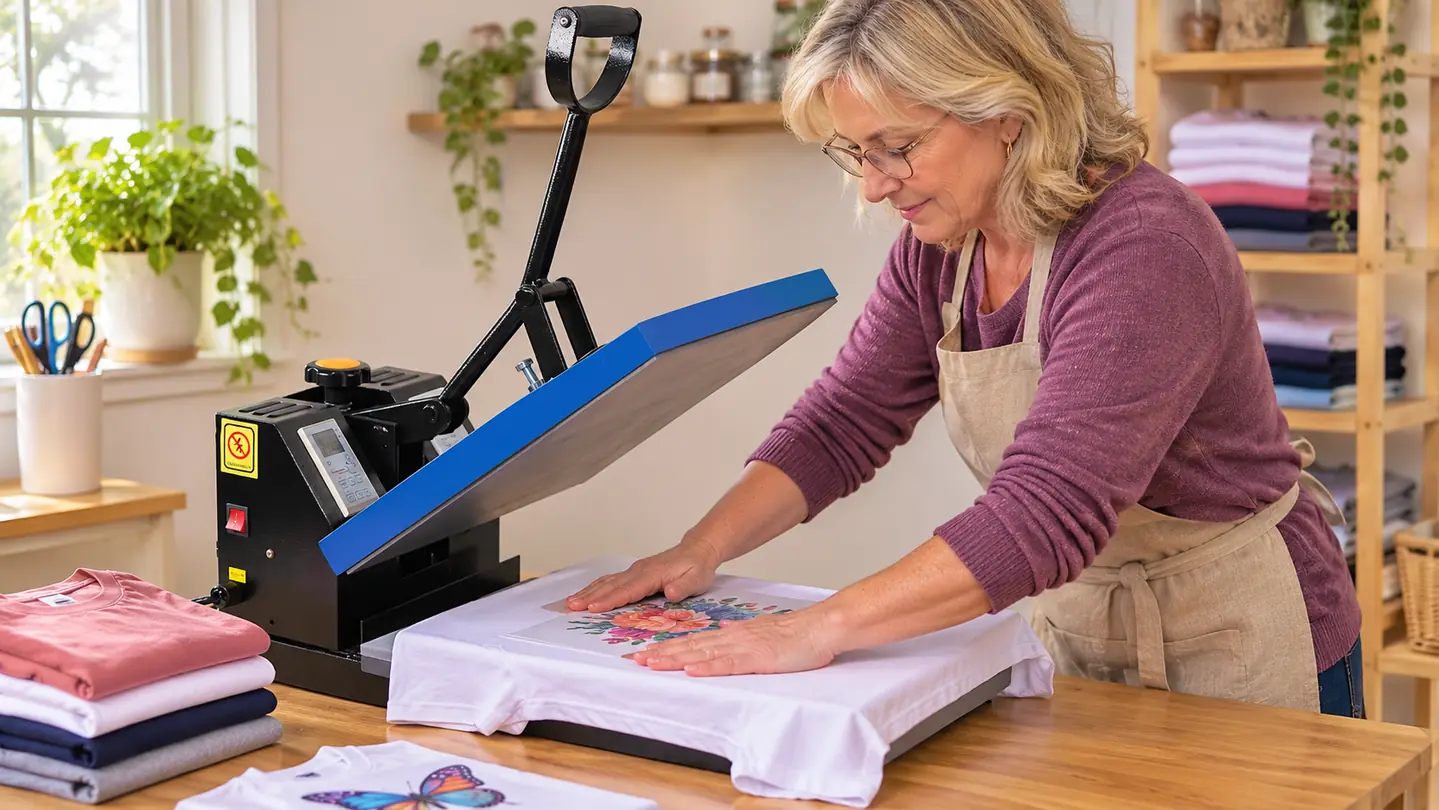
So in April I bought the Fancierstudio Digital Heat Press, the 15 by 15 model. I picked it for one boring reason: the platen is big enough to take a full back print in a single press. A 15 by 15 sheet came in the box, which I did not expect, and I used it that same afternoon on a test shirt before I touched a single order.
The control panel is electronic, with a temperature setting and a separate timer, so I dial in 375 degrees and 25 seconds for a polyester shirt and then use both hands for the shirt instead of the dial. The listing gives a range of 0 to 699 degrees Fahrenheit and 0 to 999 seconds, which is more range than I will ever need. The platen on the Fancierstudio carries a Teflon coating, so adhesive left behind by a misjudged transfer wipes off instead of baking on.
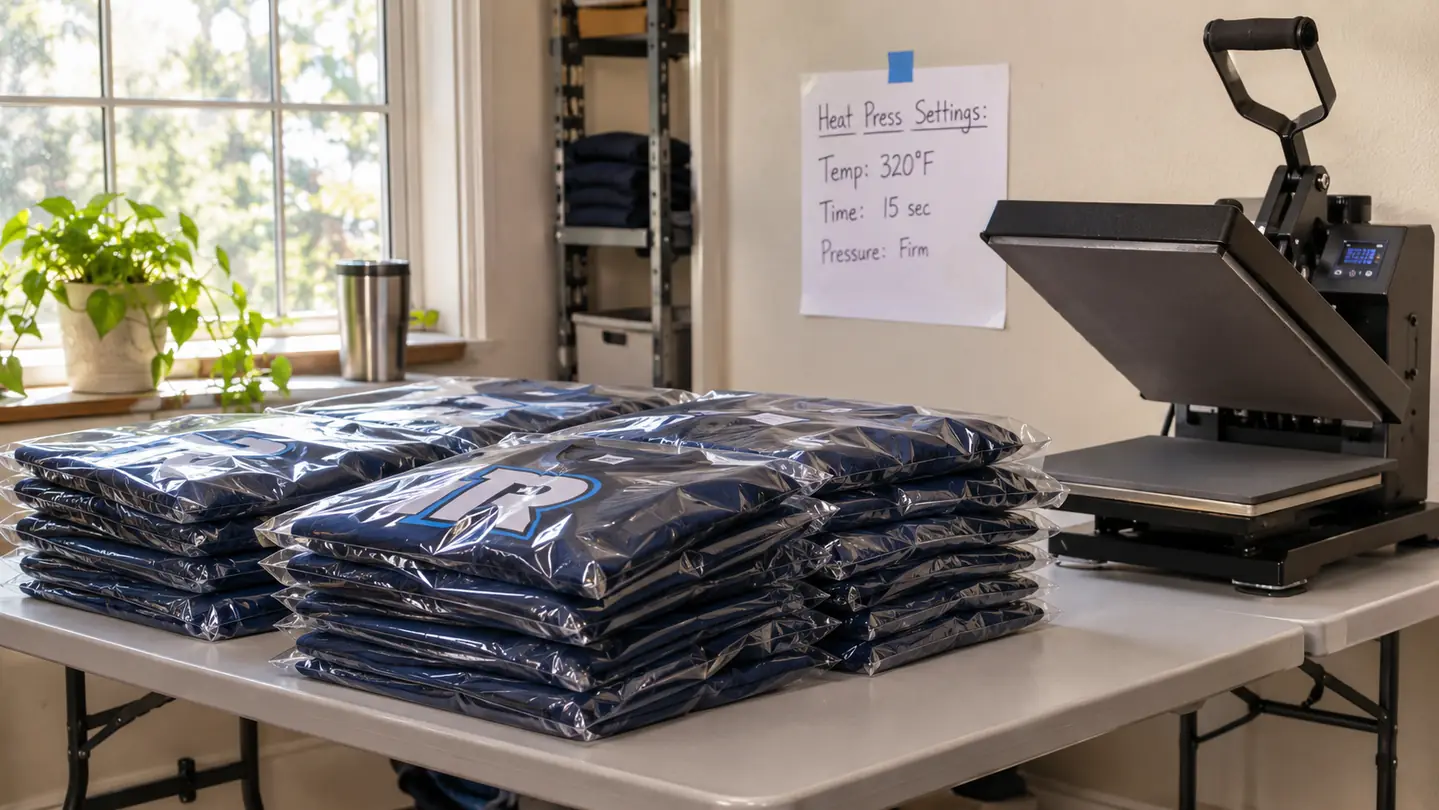
That Saturday I started pressing at 8:10. Fourteen shirts, one pass each, name and number inside the platen at the same time, and I was folding the last one at 10:40. Two of those shirts belonged to a kid whose mother had spelled the name out for me twice over the phone, and both of those came out clean on the first press.
Fourteen shirts, one pass each, finished at 10:40. The old press would have had me still swearing at noon.
If your back prints take two passes, this is the fix
The 15 by 15 platen fits a full team shirt back in one press. 1800 watts, 110 volts, electronic time and heat control, Teflon coated platen.
Amazon Check Today's Price on Amazon →I am not going to tell you a heat press made me money. What it did was take a job that used to eat a whole Saturday morning and turn it into two and a half hours, and that is the only kind of change I can actually measure.
Polyester is the blank that humbles people. At 375 degrees for 25 seconds a light polyester tee comes out flat, with no scorch and no shine along the edges. Cotton wants more heat and a little more time. I test every new blank on a scrap first, because a blend from one supplier is not the same as a blend from another, and the timer sets in whole seconds, which matters more than it sounds when you are trying to repeat a result from three weeks ago.
Rhinestone work is where even heat earns its keep. The adhesive behind the stones needs the entire design warmed at once, and a small platen gives you a hot middle with cool corners. With the Fancierstudio 15 by 15 the whole transfer sits inside the platen, so I stopped losing stones off the ends of a number. Same story for the odd blanks: mouse pads, tote bags, and a run of coasters for a teacher's group.
The press measures 33 inches long, 23 wide, and 20 tall, and it lives on the long folding table in the press room. Sal and I lifted it into place together, and the table needed a brace under the middle. That is not a knock on the press. It is a note about furniture.
The warranty runs three months, which is short, and I will not dress that up. Mine has been in near weekly use with no trouble, but I unplug it when I am finished and I keep the platen wiped down. If you plan to run it five days a week at volume, three months of coverage belongs in your thinking before you buy.
One thing I did not expect is how much flat sublimation work ends up on it. The blank goes down, the printed sheet goes on top, and the press holds the temperature steady through the whole cycle. My converted EcoTank does the printing, the press does the rest, and the two of them turn a tote bag order into a weeknight job instead of a weekend one.
What I'd Tell You If We Were Sitting at My Kitchen Table
Buy for the biggest transfer you actually make, not the average one. If half your orders are full back prints, a small platen is a false economy no matter what it saves you up front, and you will spend the difference in ruined shirts and lost Saturdays. Practice on scraps until your settings live on a card taped to the wall, with the fabric, the temperature, the seconds, and whether the shirt was light or dark. Ventilate the room, because polyester does not smell pleasant when it is hot, and open that window in February too. Keep one spare blank in every size for the order you will eventually rush. I have pressed a lot of shirts in this room, and the mistakes that cost me were never the machine. They were the shortcuts I took because I was in a hurry.
Start with the platen size you actually need
15 by 15 inches of heated surface, 1800 watts, electronic time and heat control, and a Teflon coated platen that cleans up with a wipe.
Amazon See the Fancierstudio Press on Amazon →