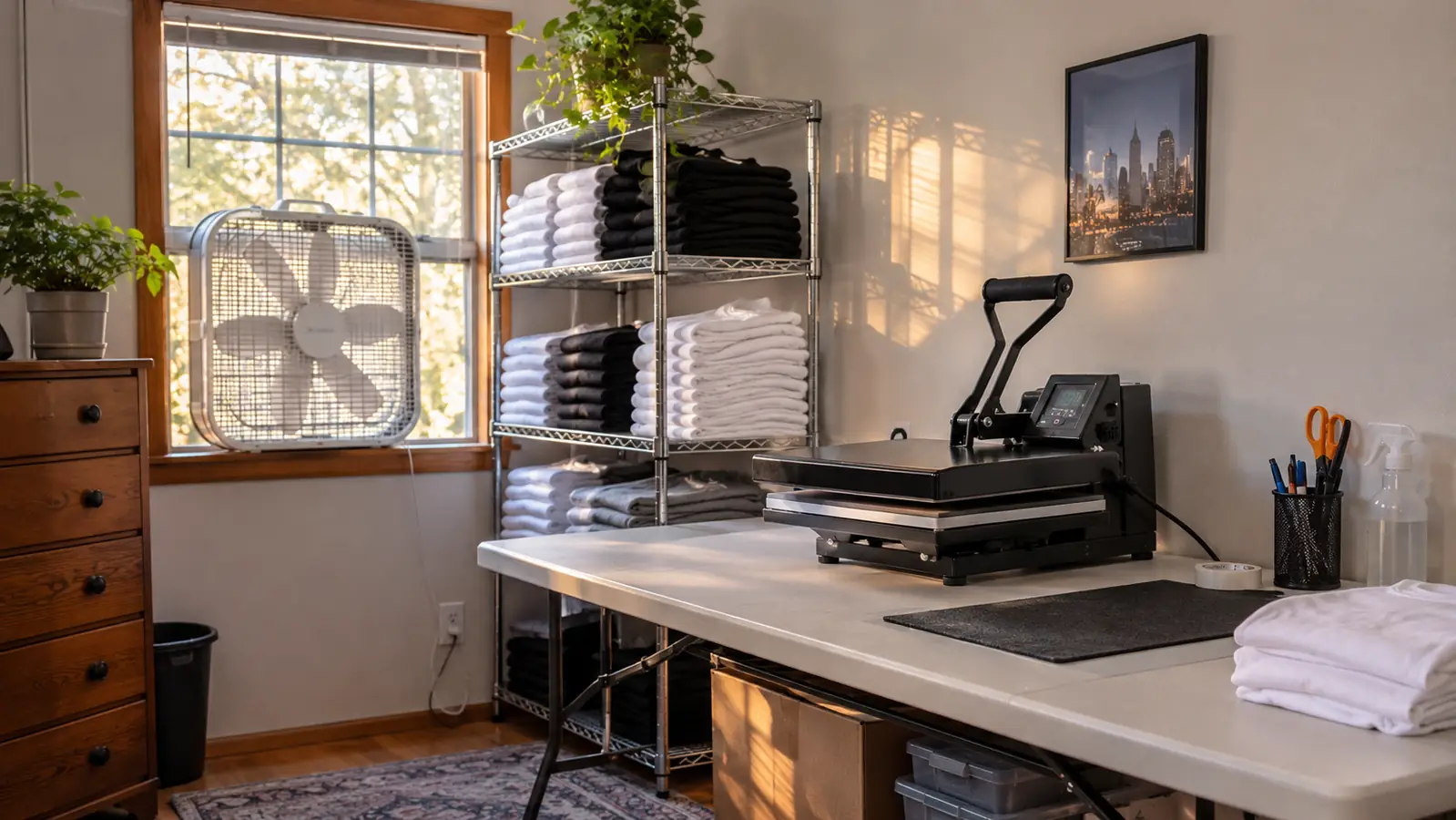
The spare bedroom in our Toms River house still has a bed in it. It also has one long folding table, a wire shelf stacked with blanks, a window fan that runs all summer, and the press. That is the whole operation. When neighbors ask how a heat press fits into a room that small, the honest answer is that I chose the machine around the room instead of making the room fit the machine. That one decision saved me a year of shoving furniture.
My press is the Fancierstudio 15 x 15 digital model, the clamshell style where the top plate comes down like a lid on a sandwich. Three years of evenings and Saturdays have gone through it: family reunion shirts in July, Little League team gear in April, teacher totes in August, holiday shirts in December. Here are ten reasons the Fancierstudio earned that corner of the room, roughly in the order I noticed them.
Measure the table first. Then look at the press.
The Fancierstudio 15 x 15 is 33 inches long and 23 inches wide closed, so a standard folding table takes it with room left for a stack of blanks. Tape the rectangle out on your own table before anything else.
Amazon Check Today's Price on Amazon →The footprint is a number you can measure before you buy
Closed, the Fancierstudio measures 33 inches long, 23 inches wide and 20 inches high. Before I ordered anything, I laid painter's tape on the folding table at those exact dimensions and lived with it for a week. The tape fit with about a foot left over for stacking shirts. If your work surface is a card table or a desk, tape it out first. Moving tape is a lot easier than explaining a return to your husband.
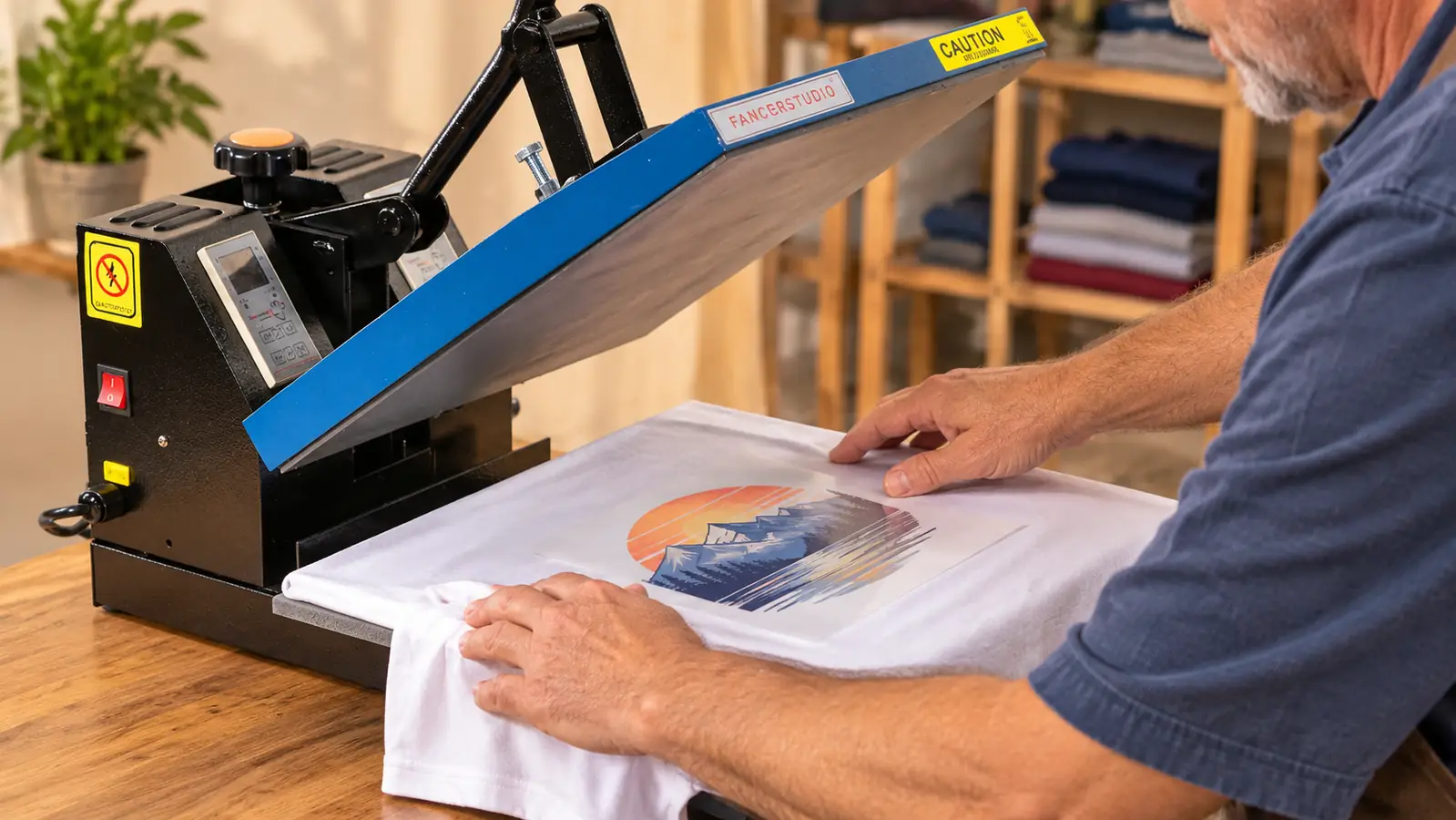
A 15 by 15 platen presses a full adult front in one pass
The Little League order taught me why the size matters. Youth shirts are small, but a full front logo on an adult shirt runs wide, and with a 15 inch square platen I lay the shirt down, close the lid once, and I am finished. The smaller press I borrowed early on meant two bites at the same shirt and a faint line where the two presses met. One pass, one clean front, no seam to explain.
The controls are a keypad, so settings stop being guesswork
Electronic time and heat control means I type a number instead of hunting for a spot on a dial. Every job in my notebook gets a line: temperature, seconds, and which blank it was. When a teacher orders the same tote in October that she ordered in March, I pull the card and get the same result twice. That is not a feature I appreciated on day one. I appreciated it the first time a repeat order came in.
The temperature range covers everything you will actually press
The range runs from 0 to 699 degrees. I have never been anywhere near the top of it. Sublimation work sits around the 400 mark and heat transfer vinyl runs much lower, and both are well inside what this press holds. The number that matters more to me is that it holds steady once it gets there. A press that drifts ten degrees mid-order hands you scorched polyester and a shirt you cannot sell to anybody.
The timer runs to 999 seconds, which matters on thick blanks
Seconds are not a detail. A thin poly tee is a short press. A canvas tote, a mouse pad or a thick cotton crewneck takes considerably longer, and the timer counts up to 999 seconds so I can set a long dwell without standing there with my finger on a button. Bags and mouse pads are listed among the recommended uses for this press, and those are exactly the jobs where the longer timer earns its keep.

The Teflon coating on the platen has saved more shirts than I can count
The platen on this one came with a Teflon coating, and it means fewer scorch marks on the fabric and less wrinkling on the cover sheet. I still use a sheet for sublimation, because that is how the process works. For a quick vinyl job on a dark shirt, though, it is one less thing to grab and one less thing to forget. The mistakes I make now are mostly mine, not the press's.
It opens upward, so the table stays a table
A clamshell lid swings up and comes back down in the same footprint. Nothing sweeps sideways into the bed or the shelf. In a spare room, sideways space is the thing you simply do not have. What you do need is open air above the press, and mine sits under the window with the fan, which is where the clearance already was. Measure upward too, not just across, before you commit.
It runs on a normal wall outlet, with one caveat
The press is 110 volts and 1800 watts. That is roughly what a space heater pulls. It plugs into the same kind of outlet the lamp uses, but it does not want to share that circuit with the window fan, the printer and the iron all at once. I tripped a breaker my first winter and I have kept the press on its own line since. Check what else sits on that circuit before you commit to the room.
It is quiet enough to press at nine at night
There is no compressor and no hiss of steam. It clicks, it hums for the seconds, the lid comes up. Sal is retired and goes to bed early, and I have run orders past ten in the evening without him noticing from the next room. For anyone holding down a day job and pressing afterward, that quiet matters more than half the numbers printed on the box.
A 15 by 15 pressing sheet comes in the box
The press arrives with a 15 by 15 heat press sheet included, so the first shirt does not wait on a second order. I pressed a test shirt the same night mine arrived, a plain one from my husband's drawer that was never going to be sold to anyone. Learning your timing on a shirt nobody wants is the cheapest education in this business. Do that before you touch a customer's blank.
What I'd Skip
Three things I would skip. The first is tumblers. A flat 15 by 15 platen is built for flat goods, and drinkware needs a different tool entirely, so do not buy this Fancierstudio press thinking it covers mugs because a neighbor asked. The second is a room with no clearance above the lid, because the press has to open and a low shelf will stop it. The third is expecting a long warranty. The coverage listed is three months. Buy this as a workhorse, not as an heirloom, and keep a spare shirt on the shelf.
Thirty-three inches long, twenty-three wide, twenty high. If that rectangle fits your table, the room was never the problem.
The corner of the spare room is still available
Three years in, it is the same folding table, the same window fan and the same press. If you have a rectangle of table and an outlet that is not already crowded, you have a press room.
Amazon Check Today's Price on Amazon →