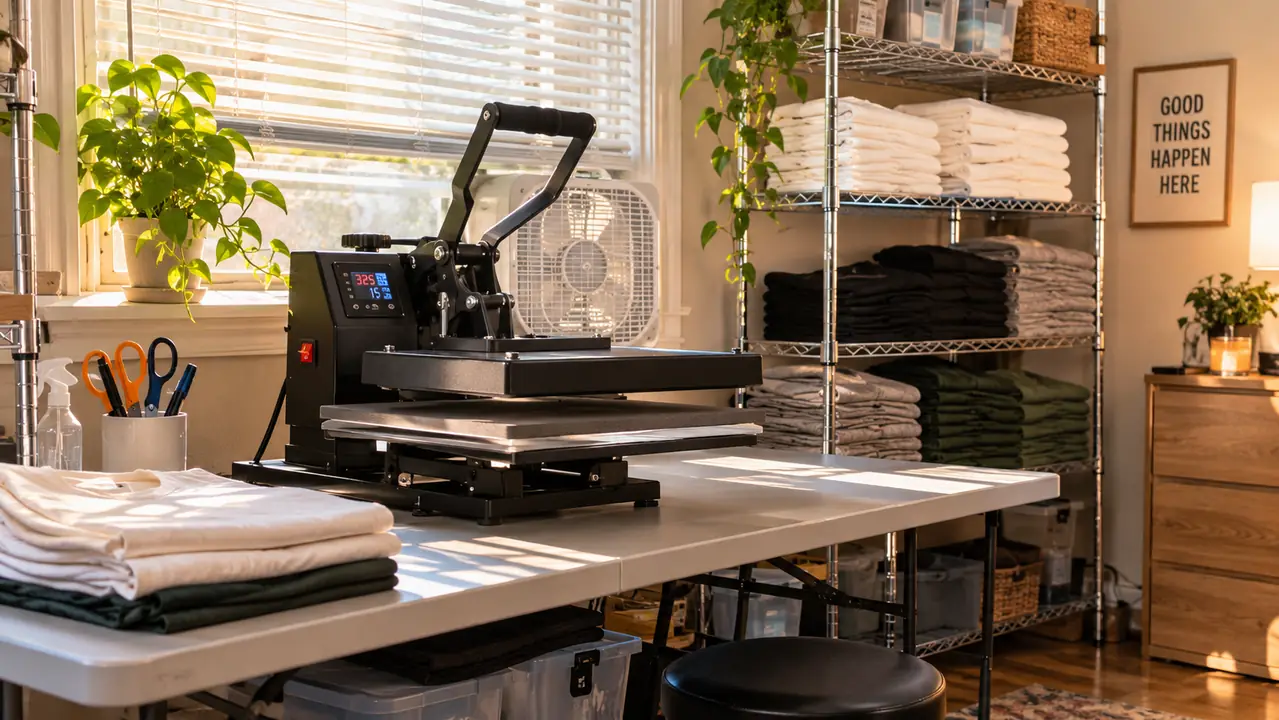
Three years ago I bought a heat press because my cousin's reunion committee needed forty shirts and I said yes before I thought it through. The press stayed. So did the orders, mostly from neighbors, two teachers' groups, and one very organized Little League mom who emails entirely in capital letters. What I did not expect was how much of this would come down to a bottle of ink. For two years I ran whatever came with the printer and then a parade of cheaper refills, and I spent more evenings than I care to admit scrubbing magenta off a mug that came out looking like a bruise. Then I moved my Epson EcoTank ET-2800 over to Hiipoo sublimation ink. The mugs stopped bruising. That is the short version, and the rest of this page is the long one.
I want to be clear about what I am and what I am not. I am a 54-year-old woman in Toms River, New Jersey with one converted printer, one long folding table in the spare bedroom, and a husband named Sal who folds and bags orders and complains about the window fan. I am not a printer technician. I have never worked in a print shop. Everything below is what happened at my table over a stretch of months, in the order it happened.
The Quick Verdict
Four bottles that ended my bruise-coloured mug problem. It will not save you on high-cotton blanks and it wants a nozzle check after a quiet week, but it is the first sublimation ink I have reordered without hesitating.
Amazon Check Today's Price →The four bottles that stopped my mugs from coming out grey and pink
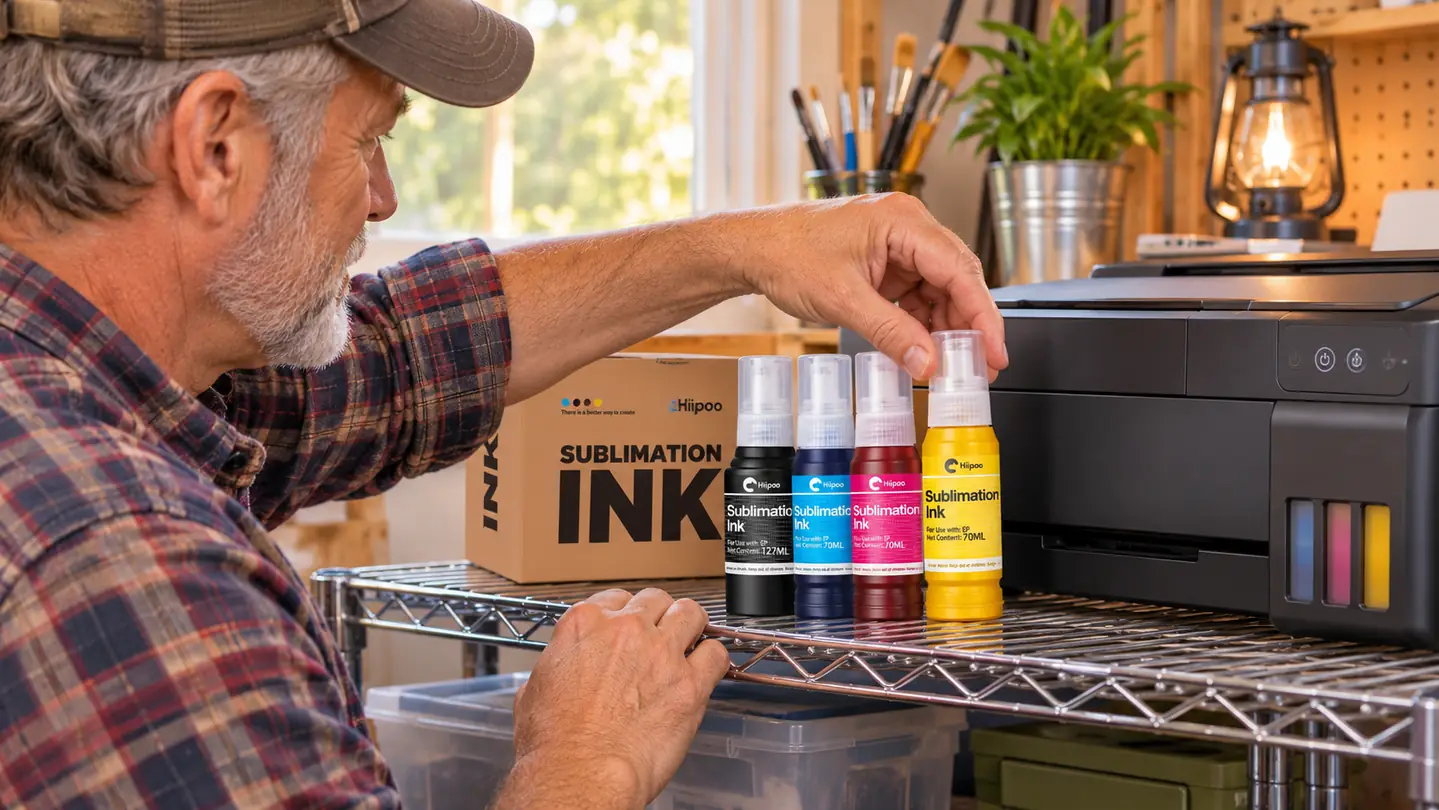
Hiipoo sublimation ink, four refill bottles for the EcoTank models spelled out on the product page. If your blacks are drifting and your reds are going soft, this is the swap I made and stayed with.
Amazon Check Today's Price on Amazon →How I've Used It
My EcoTank ET-2800 has only ever had sublimation ink in it. I converted it when I bought it and have never run a drop of the regular stuff through it, so I cannot tell you what happens if you try to switch a printer back and forth. What I can tell you is how the fill goes. The bottles are sized for the reservoirs on these EcoTank models, the listing spells out the compatible model numbers, and the pour is slow and controlled if you do not squeeze. My first attempt, I squeezed. I am still finding cyan on the corner of that table.
A set is four bottles: black, cyan, magenta and yellow. That is the whole colour set for these printers. No extra photo black, no light magenta. If you are used to a six-cartridge photo printer this will feel like a short palette, and it is one. For mugs, shirts and tumblers it has been plenty, and I have not once wished for a fifth bottle.
My order mix is not glamorous. Family reunion shirts in the summer. Tumblers for two teachers' groups at the end of the school year. Little League team gear in the spring, which arrives as a panic and leaves as a stack of bags by the front door. Holiday mugs in November and December, which is the stretch where Sal stops complaining about the fan and starts asking whether we can eat dinner at a normal hour. All of it runs through the one printer and the one Hiipoo set sitting on the wire shelf beside it.
What Four Bottles Actually Cover
The listing puts the yield at 7,500 pages. I have not counted pages, because pages are not what I sell. What I can tell you is that I have printed through a full summer of shirts, a teachers' group order of 68 tumblers, two rounds of team gear and most of a holiday season on a single set, and I am still on that set. If you are weighing cost per order, that is the number that matters to you, not the page figure. It outlasted the third-party refills I used to buy, and I stopped keeping a spare set in the drawer, which tells you what I actually think of it.
The ink base is water, which matters for how it behaves in the print head and how it smells in a small room. My press room is a spare bedroom with one window fan, and the ink has never been the thing that made that room smell. The press does that. The ink is quiet.
The listing also cites ISO-9001 certification. I am not a person who can audit a certification and I am not going to pretend otherwise. I mention it because it is on the product page and because, in my experience, the batches have been consistent. The black in bottle one printed the same as the black in bottle three, and with the cheap refills that was not always true. A black that shifts halfway through an order is a problem you cannot fix after the press closes.
Colour That Survives the Wash, and the Cotton Line
Here is the thing the listing says plainly and most people skim past: sublimation ink only works on fabrics that are less than 30 percent cotton. I want to underline that, because it is the number one reason people blame ink for a bad result. I did it myself. A neighbor brought me a soft tri-blend shirt she loved, I printed it, and it came out looking like a faded photocopy. That shirt was more cotton than the ink could bond with. It was not a Hiipoo problem. It was a me problem, and it cost me one shirt and some pride.
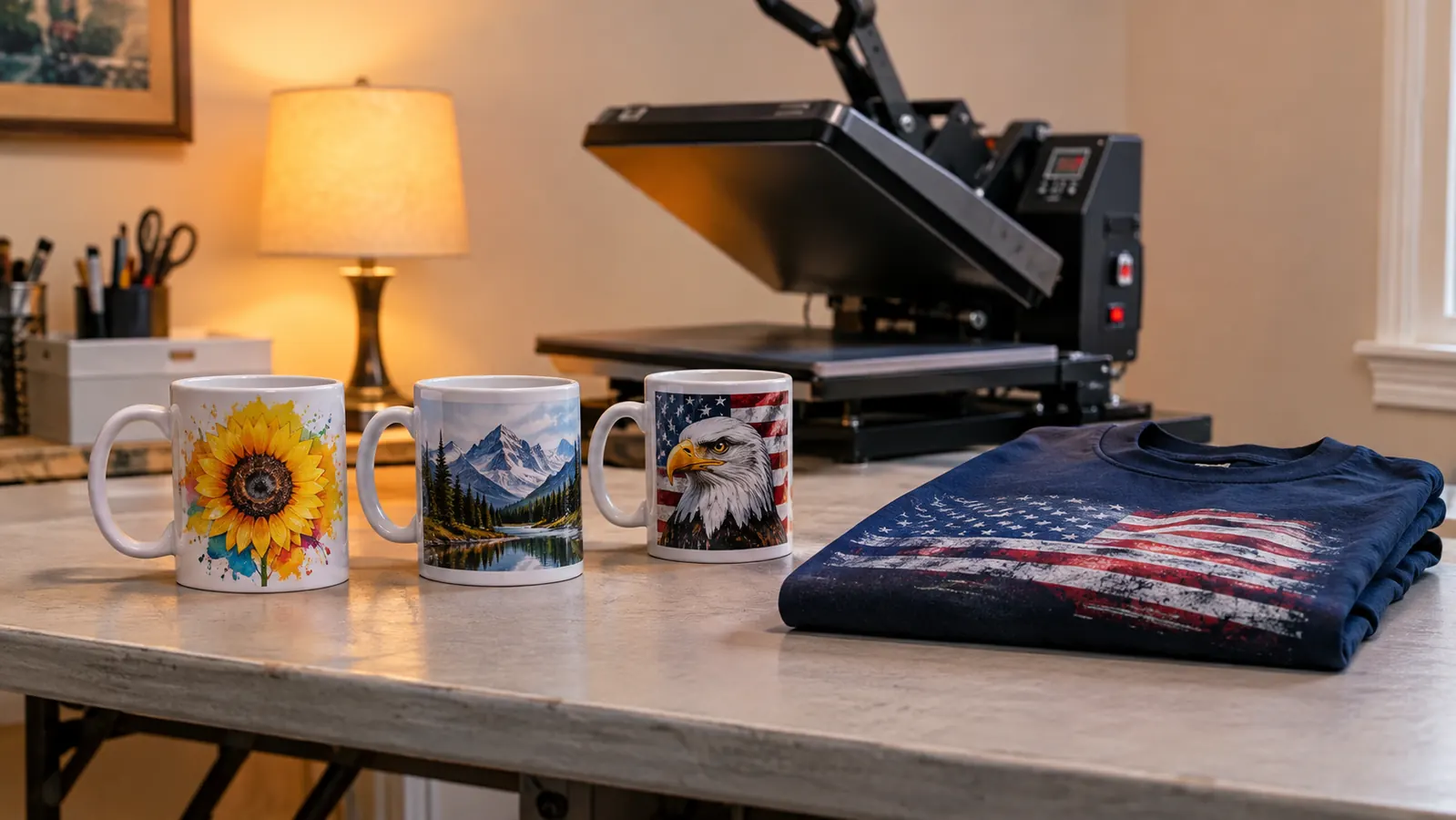
On polyester and on the blends that stay under that line, the colour is the reason I stayed. Deep blacks. A red that reads as red and not as a soft pink after the second wash. I printed a run of tumblers for a teachers' group in June, they went through a summer of dishwashers and coffee refills, and the ones I have seen since still look like the day they came off the press. White shirts are where you notice all of this most, because a weak black on white looks grey and everybody in the room can see it.
One more note on colour, since I have scorched my share of polyester. The press setting matters as much as the ink does. Same ink, same shirt, three different times and temperatures, and you get three different results. I keep a notebook now: temperature, time, pressure, and what the shirt was made of. When something comes out wrong the notebook tells me whether it was the ink or me, and nine times out of ten it was me.
What I Tried Before This
My first year I ran a set of refill bottles from a brand I could not name for you now, bought because they were the cheapest four-pack that came up in a search and arrived in a bag. The black was fine. The magenta was not. It printed a flat, slightly dusty pink that looked acceptable on a test page and wrong on a white shirt, and I did not find out until a teacher's tumbler order was already pressed and stacked. I reprinted nine tumblers out of my own pocket and ate the evening.
After that I tried a second brand, better than the first, and it worked until it did not. Halfway through a batch of team shirts the black started printing light, which is the worst possible moment for anything to change. I finished that order with a fresh bottle and a bad mood. That was the point where I stopped shopping on the cheapest option and started asking who actually reorders. Hiipoo came up over and over in the sublimation groups I read, from people who print far more than I do, and the review count on the listing was not small. I ordered one set. I have ordered two more since.
Where It Struggles
It is not perfect and I am not going to write a page that pretends it is. The first thing: the printer sits. I run this as an evenings and Saturdays business, so there are stretches where the ET-2800 goes a week or more without printing anything. Sublimation ink is thicker stuff than regular ink, and a quiet week can leave you with a nozzle check that looks like a bad comb. I run a check and a cleaning cycle before every big order now. It takes a few minutes and it has saved me a shelf of blanks.
Second: the cotton line is a wall, not a suggestion. If your customers bring you the soft cotton shirts they actually like to wear, this ink cannot help you and neither can any other sublimation ink. Those jobs need heat transfer vinyl or DTF, and no bottle on the market changes that. I turn those orders away or quote them differently, and I would rather turn them away than hand back a shirt that looks washed out.
Third: four colours is four colours. If you are chasing a very specific brand colour for a corporate order, you will spend an evening on colour profiles and you may still land a shade off. For team gear, reunion shirts and tumblers with a name on them, nobody has ever handed one back to me. For a company that wants their exact logo red, I say something up front.
What Changed After the First Few Months
The honest summary is that I stopped thinking about ink. That sounds like a small thing and it is the whole thing. Before, every big order started with a test print and a quiet worry. Now it starts with a nozzle check and then I get to work. The failures I still have come from pressing too hot or grabbing a blank that was too cotton-heavy, and both of those are things I can fix at the table.
The other change is that my scrap bin got lighter. I keep a plastic bin under the table for misprints, and in the bad months it filled up fast enough that Sal started calling it the graveyard. These days it holds a mug here and there, usually because I was rushing to finish before dinner. When you are printing 68 tumblers in a weekend, a lower failure rate is not an abstraction. It is Saturday night back.
I have reordered this set twice and did not go looking for something cheaper either time, which is the most honest review I can give a product. I am not loyal to brands. I am loyal to not redoing orders.
What I Liked
- Blacks stay black and reds stay red through repeated washing on polyester
- One set covered a summer of shirts, 68 tumblers, two rounds of team gear and most of a holiday season
- Batches have been consistent, bottle to bottle and order to order
- Bottle necks fit the EcoTank reservoirs without a funnel or a fight
- Water based, so it is not the thing making the spare room smell
Where It Falls Short
- Will not work on anything over 30 percent cotton, and customers will bring you exactly those shirts
- A week of sitting idle leaves the print head unhappy, so you run a check first
- Four colours only, no light magenta and no photo black
- Exact brand colour matching takes patience and sometimes a compromise
The black in the first bottle printed the same as the black in the third. With the cheap refills that was never true, and a black that shifts mid-order is a problem you cannot fix after the press closes.
Who This Is For
This is for the person with an EcoTank printer on a folding table who is taking real orders: shirts for a team, tumblers for a school, mugs for a family party. You already know your blanks have to be polyester or a low-cotton blend. You have already figured out that the cheapest ink on the shelf costs more in reprints than it ever saves. You want to fill the reservoirs, run a nozzle check, and get to pressing before the evening is gone. That is who this set is built for, and it is who I am.
Who Should Skip It
Skip it if your customers keep handing you cotton. Skip it if you are doing this once, for one shirt, for one birthday, because a full set of bottles is more ink than a single project will ever use and it will sit in a drawer and go thick. Skip it if you need a photo printer's colour range or exact brand matches on corporate work. And skip it if you are not willing to keep a notebook and dial in your press settings, because ink cannot rescue a press that is running too hot. One more: check your model number against the compatibility list before you order anything. I only know the ET-2800, and I am not going to guess about yours.
If your mugs are coming out grey and pink, this is the swap I made
Four compatible refill bottles for the EcoTank models listed on the product page. It ended my reprint problem and it kept the scrap bin empty through a holiday season. It will not fix a cotton shirt, and I would rather tell you that now than have you find out on a customer's order.
Amazon Check Today's Price on Amazon →