Short answer first, because I get cranky when a comparison makes me scroll for it. Epson's own ink will not put a sublimation transfer on a shirt. Hiipoo sublimation ink will. If your goal is a photo for the fridge or a shipping label, Epson's own bottle is the right one and you can stop reading here. If your goal is a design pressed into polyester, the bottle in your hand needs to say sublimation on the label, and Hiipoo is the one sitting on my wire shelf.
Here is the part that took me a whole season to understand. These two are not really rivals. They are two different jobs that happen to fit the same printer, and the mistake I see most is a person buying one and expecting the other.
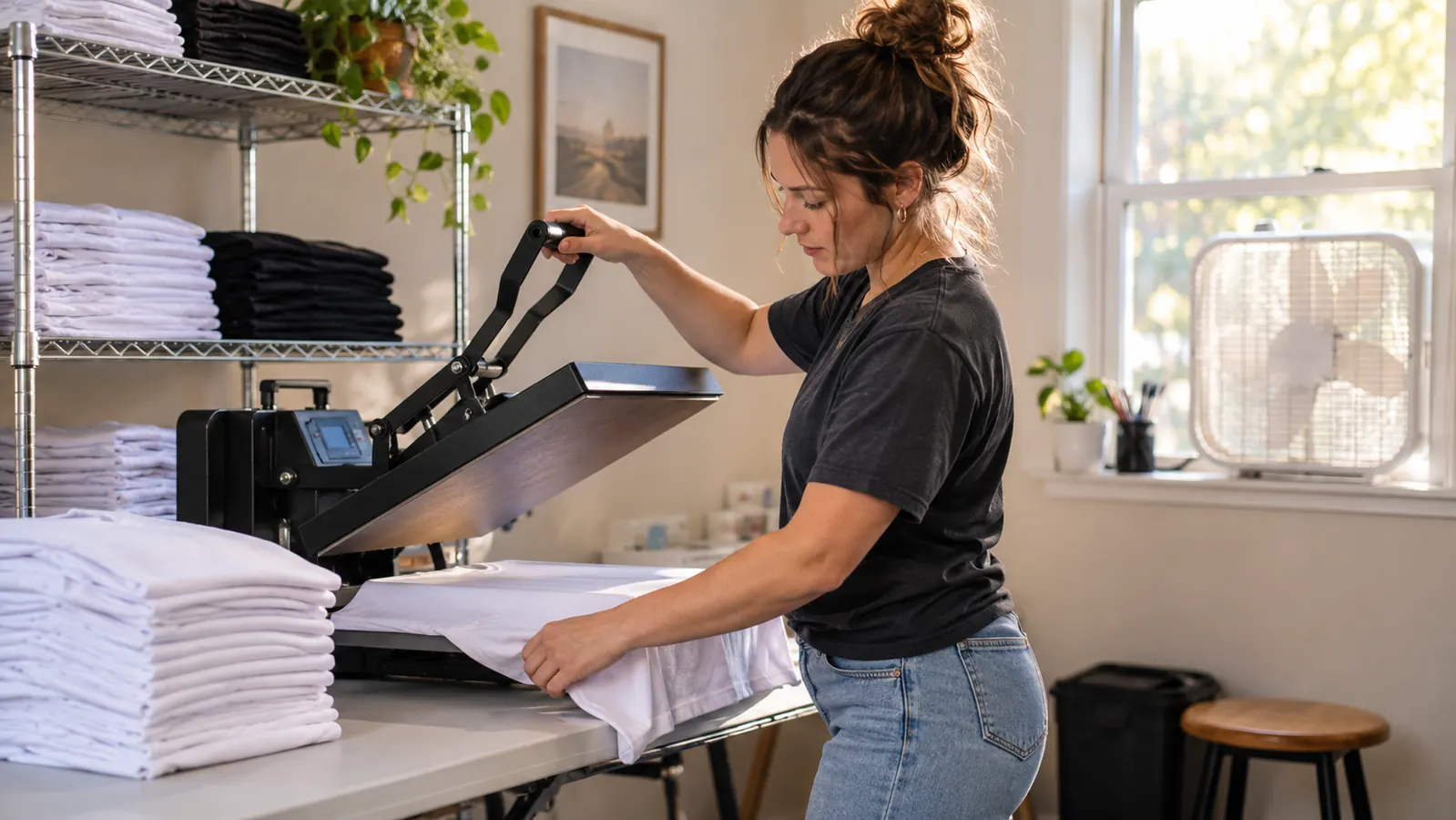
I run a converted Epson EcoTank ET-2800 in the spare bedroom of my house in Toms River, New Jersey. One long folding table, a heat press, a wire shelf of blanks, a window fan that runs whenever I am working. The business started about three years ago with family reunion shirts and grew into teacher tumblers, Little League gear and a small Etsy shop. My husband Sal folds and bags the orders and pretends he does not enjoy being the test wearer. That printer has only ever had sublimation ink in it, and the Hiipoo bottles are what I have refilled it with. I am not telling you this ink fits your machine. I am telling you what it did in mine.
| Hiipoo Sublimation Ink | OEM Epson Ink | |
|---|---|---|
| What it is built for | Sublimation transfer onto polyester and coated blanks | Everyday printing on paper |
| Printing on paper | Not what it does. Sublimation ink on plain paper is a waste of paper. | Its whole job. Photos, forms, labels, the crossword. |
| Transferring onto a mug or shirt | The point of the bottle. Presses into synthetic fabric and coated blanks under heat. | Does not sublimate. No amount of heat changes that. |
| Blanks it can handle | Fabrics under 30 percent cotton, plus coated mugs, tumblers and blanks | Paper. That is the list. |
| Running cost | Four refill bottles in one set, stated 7,500 page yield, high yield tanks | Epson's own bottles at Epson's own pricing |
| Printer warranty | Third party ink. If a printhead fails, that is a conversation you own. | Stays inside Epson's own terms |
| Fits my ET-2800 | Yes, one of the models the compatibility list names | Yes, that is what the machine was sold for |
Where Hiipoo Wins
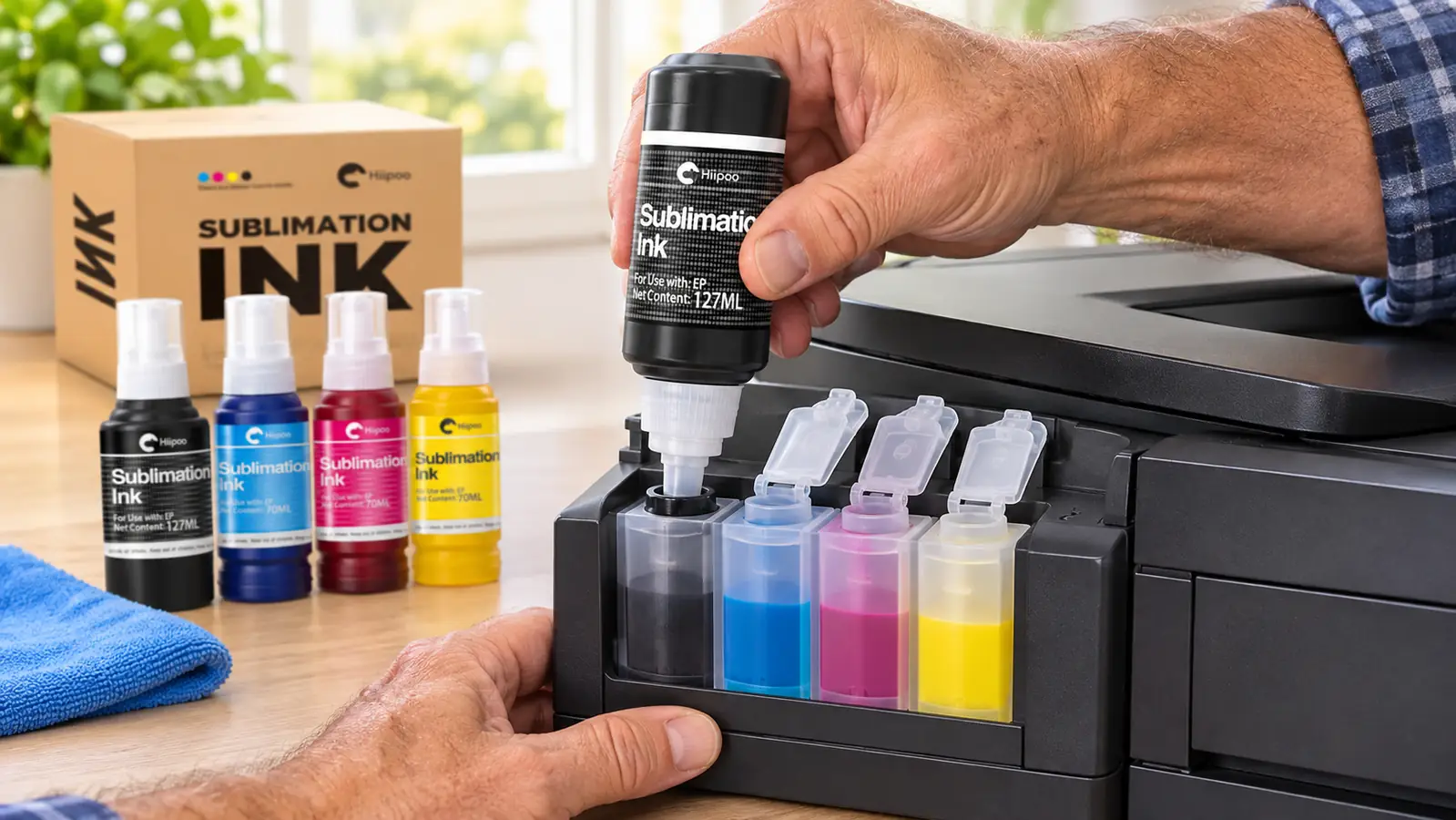
The first thing Hiipoo wins is the only thing that really matters. It sublimates. The set is four refill bottles, black, cyan, yellow and magenta, water based, with a stated yield of 7,500 pages. I top up the tanks on the ET-2800 every few weeks depending on how many orders came in, and there has been no clogged head to fight. The colour on polyester comes off the press dense. Black is the tell with any sublimation ink. A weak one gives you charcoal grey that looks acceptable on the table and sad on a person wearing it.
The second win is the range of blanks it can handle, with one large caveat I will get to in a minute. Polyester performance shirts, poly rich blends with a low cotton count, coated mugs, coated tumblers, the little keychains the teachers' group ordered in May. It is the only one of these two inks that has any business near a heat press at all. Epson's own ink is not a worse version of this. It is a different product for a different job, and no amount of pressing will change what is in the bottle.
The third win is boring, which is exactly why I like it. The set has behaved the same bottle to bottle. No colour drift between refills, no surprise banding on a big run, no bottle that acted differently from the one before it. I pressed 40 shirts in a weekend on this ink and then repeated the same design three weeks later for a late addition to the order, and the two matched. The late shirts were for a cousin who never sent his size, so I pressed three on a Tuesday evening three weeks after the first run and held one next to a shirt from the original batch under the lamp over the table. Same depth, same crisp white lettering, no difference I could see. I have had a bottle drift between batches before and it is a miserable thing to notice in front of a customer. The listing names the ET-2800 among the models it fits, along with a long list of others, and it holds a 4.8 rating across more than 4,400 reviews. A rating has never pressed a shirt for me, but it does tell you the returns are not piling up.
Where OEM Epson Ink Wins
Epson's own ink wins the warranty argument, and I am not going to pretend otherwise. Third party ink puts the printhead conversation on you. If a head clogs while the machine is still inside Epson's terms and there is Hiipoo in the tanks, Epson will point at the ink, and they are within their rights to. Their own bottles keep that argument off the table entirely. If your printer is also the family printer, the one that prints the school forms and the tax return, that matters more than anything I can tell you about colour saturation.
It also wins at the thing it was actually built for. Photos for the fridge, forms, labels, the Sunday crossword. Sublimation ink on plain paper is not a substitute and I would not try to sell it as one. There is a support side too. Call Epson with a problem and you get a person talking about their own product. Put a third party bottle in and the troubleshooting is you, a search bar and a nozzle check pattern at eleven at night. I have been that person. It is not the end of the world, but nobody should walk into it by accident.
If the press is staying in the spare room, this is the bottle that feeds it
Four refill bottles, black, cyan, yellow and magenta, water based, a stated 7,500 page yield, and a compatibility list that names the ET-2800. It is what has been in my EcoTank through three years of reunion shirts and teacher tumblers.
Amazon Check Today's Price on Amazon →How I Have Used Both, and What I Count as a Pass
One machine, one set of tanks, about three years. The ET-2800 was bought for this work and converted before the first job, so every drop that has gone into it has been sublimation ink. I am the wrong person to ask whether sublimation ink and Epson's ink mix well in the same tanks, because I have never mixed them and I do not plan to. If you are converting a printer the family already uses, flush it properly or use a different machine. That is not a line from the manual. That is me imagining the phone call.
My test is not the first press. Any ink looks good on the first press. My test is the fourth wash and the thirtieth day. I keep a sample from every large order in a drawer in the press room, labelled with the date and the blank, and I wash it with the regular laundry until I either trust it or I do not. The reunion order was 40 shirts. The teachers' group was 24 tumblers. Little League was a set of practice shirts in April that got worn twice a week until June. Nothing came back. There is a sample in that drawer from a neighbour's order in September, a poly performance shirt that has been through the wash more times than I can count, and the edges of the design are still sharp. That one shirt is the reason I stopped double pressing everything out of nerves and started trusting the press timer. I keep the drawer on purpose. When I doubt the ink, I go look at it.
I judge on three things. Does the black go grey. Does the design survive a wash cycle and a hot dryer. Does the bottle last through the order without running dry halfway. Two of those are about the ink. The third is about how much is in the bottle, and the stated 7,500 page yield has been more than enough for the volume I do, which is evenings and Saturdays, not a print shop.
The 30 Percent Cotton Rule Nobody Reads
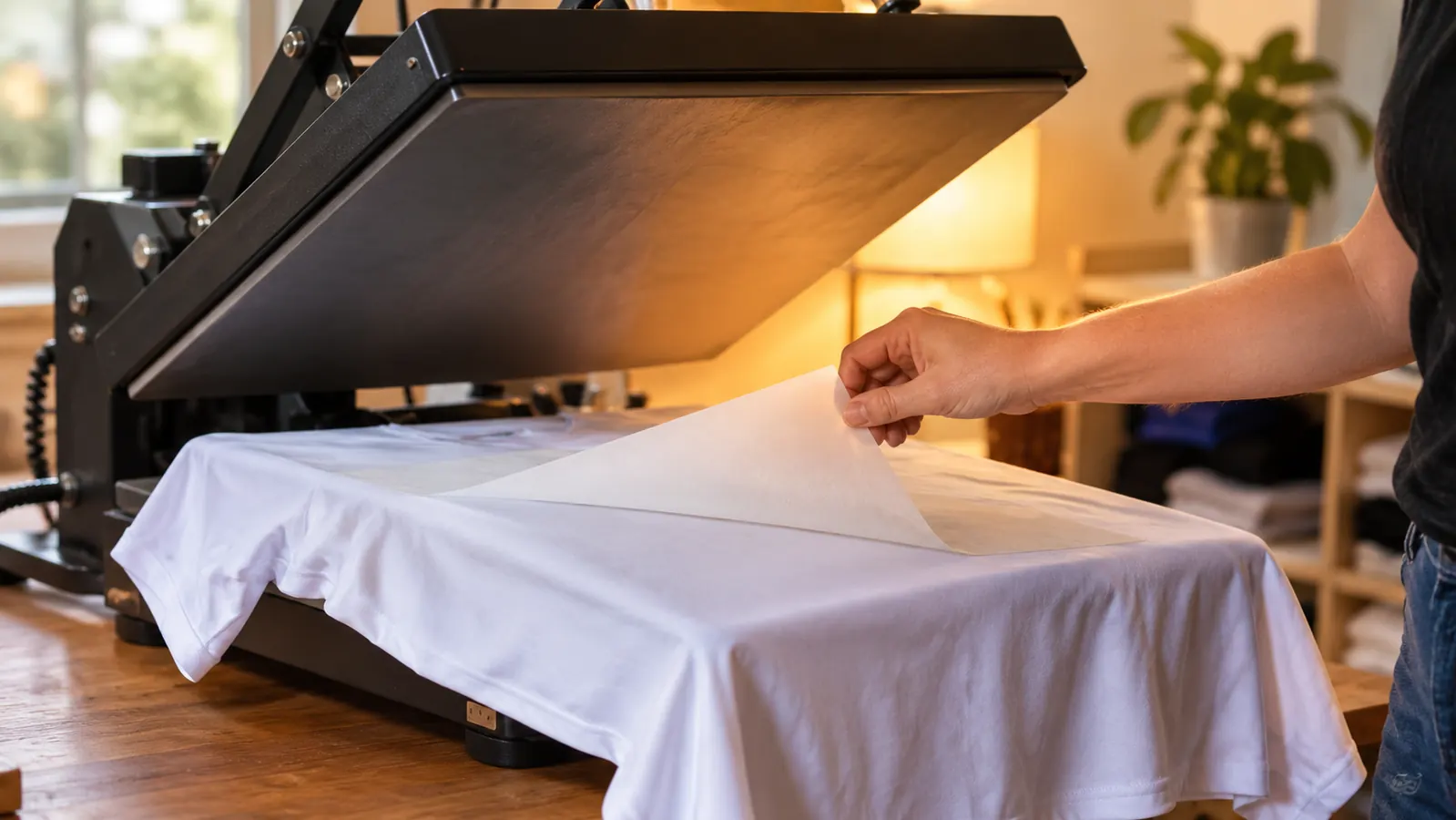
The line in the listing says it plainly: sublimation ink can only be used on fabrics containing less than 30 percent cotton. This is not a suggestion and it is not the seller being over cautious. Sublimation works by turning the ink into gas and driving it into the fibre of a synthetic. Cotton will not take it. My first summer, I pressed a set of cotton blend shirts, looked at the sample, decided it was fine, and ran twenty of them. By the fourth wash the designs were a rumour. The customer was kind about it. I was not kind to myself. I replaced all twenty over the next two weekends, and I did it with heat transfer vinyl rather than sublimation, which meant cutting and weeding instead of printing. Sal bagged them without a word, which is how I knew he felt sorry for me. That customer still orders from me, and I count that as luck rather than skill.
Now I read the tag before I quote anything. A performance shirt that is all polyester is the easy yes. A poly rich blend with a little stretch usually behaves. A 50/50 is a no, and a hundred percent cotton is a no, no matter how good the design is. When a customer brings me cotton, I say so at the counter and offer a heat transfer vinyl quote instead, because a shirt that fades in a month is worse for my name than a shirt I turned down.
Week to Week in the Press Room
Refilling is the least glamorous part of the job. I put a towel down on the folding table and fill each tank to the line and not one drop past it, because overfilling is how you end up cleaning the shelf and giving yourself a lecture. The window fan runs the whole time. The bottles live on the wire shelf, upright, out of the sun. I check the levels before a big run rather than in the middle of one, and I fill on a Tuesday evening if the weekend looks busy, because discovering a low tank at nine on a Saturday morning with a customer's mugs lined up on the table is a special kind of annoyance. The fan runs whether or not the ink smells of anything, not because it is strong but because the room is small and I am in it for hours.
The rest is ordinary. Sal folds, I press, the window fan hums, and a mug order takes a Saturday morning. A 40 shirt order takes a weekend and a lot of coffee. What the Hiipoo set changed for me was not the speed of any of it. It was that I stopped bracing for a bad print. When you take money from a neighbour for a shirt with their kid's team on it, bracing is most of the stress.
Any ink looks good on the first press. Mine has to look good on the fourth wash, on a shirt a neighbour paid me for.
What I Liked
- Four refill bottles, black, cyan, yellow and magenta, in one set
- Water based, high yield, stated at 7,500 pages
- Colour held on polyester through repeated washes in my sample drawer
- Names the ET-2800 and a long list of other EcoTank models
- Consistent bottle to bottle across three years of refills
Where It Falls Short
- Useless for printing on paper, so it cannot be your only ink
- The under 30 percent cotton rule trips up more beginners than anything else
- Third party ink hands Epson a reason to point at the printhead if the machine fails under warranty
Who Should Buy Which
Buy the Hiipoo set if the printer is a sublimation machine and nothing else. If it lives in the press room, if the only thing it ever prints is designs headed for polyester and coated blanks, and if you have already made peace with the warranty conversation, this is the bottle. It is also the sensible pick when you are converting a spare EcoTank and want all four tanks filled in one purchase with a stated yield you can plan around.
Buy Epson's own ink if the machine is shared. If the same printer handles the school forms, the photos and the shipping labels, keep Epson's ink in it and buy a second printer for sublimation, even a small one. And if you are six weeks into this and not sure it will stick, stay with Epson's ink, keep printing on paper, and press your first shirts somewhere else before you convert anything. The ink is not the part of getting this wrong that hurts.
The bottle that actually transfers, for the printer that only presses
If the EcoTank has been converted and the family photos go through a different machine, this is the set to keep on the wire shelf. Four bottles, water based, a stated 7,500 page yield, and the ET-2800 on the compatibility list.
Amazon Check Today's Price on Amazon →