I want to start with what I got wrong, because it cost me a stack of shirts and most of a Saturday. Three years ago I took my first family reunion order, bought a pack of A-SUB sublimation paper, and assumed the paper was the least interesting part of the whole setup. It is not. The paper decides whether your design lands crisp or comes out looking like it was pressed through a sock. It decides whether the sheet feeds straight or jams sideways at the worst possible moment. And it decides whether you get three good shirts out of a stack or thirty.
I have run through a good many packs of A-SUB 8.5x11 since then, 110 sheets to a pack, out of the spare bedroom in my house in Toms River. This is the review I wish somebody had handed me at the start: what the paper does well, where it will annoy you, and the honest line between the two.
The Quick Verdict
A dependable workhorse with a genuinely high transfer rate and enough forgiveness for a beginner's press timing. It curls, it clings to itself, and it cannot rescue a cotton blank. Buy it for polyester, ceramics and small blanks, keep it dry, and it will hold up.
Amazon Check Today's Price →The pack I reorder the week the reunion shirts come in
8.5x11, 110 sheets, coated for sublimation ink only. Check the current sheet count and today's price before you commit to a bulk order for a big job.
Amazon Check Today's Price on Amazon →What A-SUB Paper Actually Is, and What It Isn't
The listing facts are simple and I will give them to you straight. This is 8.5 by 11 inch paper, 110 sheets to the pack, coated finish, listed at a 120 paper weight with the item itself weighing 125 grams. That is a light-to-middling sheet, not cardstock, not tissue. It feels like a decent laser sheet in the hand, a little stiff, with one side that takes ink and one side that mostly does not.
The one hard rule stamped on the package: it only works with sublimation ink. Regular ink does not work. Not slightly worse, not usable in a pinch, does not work. If you have a printer with standard ink in it, this paper is not going to do anything for you. If you have a converted printer, which in my case is one Epson EcoTank ET-2800 that has only ever had sublimation ink in it, this is the paper you feed it.
What it is not: it is not a cotton paper, it is not a dark garment paper, and it is not a permanent transfer that survives everything you can throw at it. The listing says it applies to white or light colored high quality polyester, to material with a cotton content of 30 percent or less, and to ceramic, tile, phone cases and metal. That is an accurate list. Every disappointment I have had with this paper traced back to me ignoring one of those lines, not to the paper being bad.
How I've Used It: Real Orders, Real Mistakes
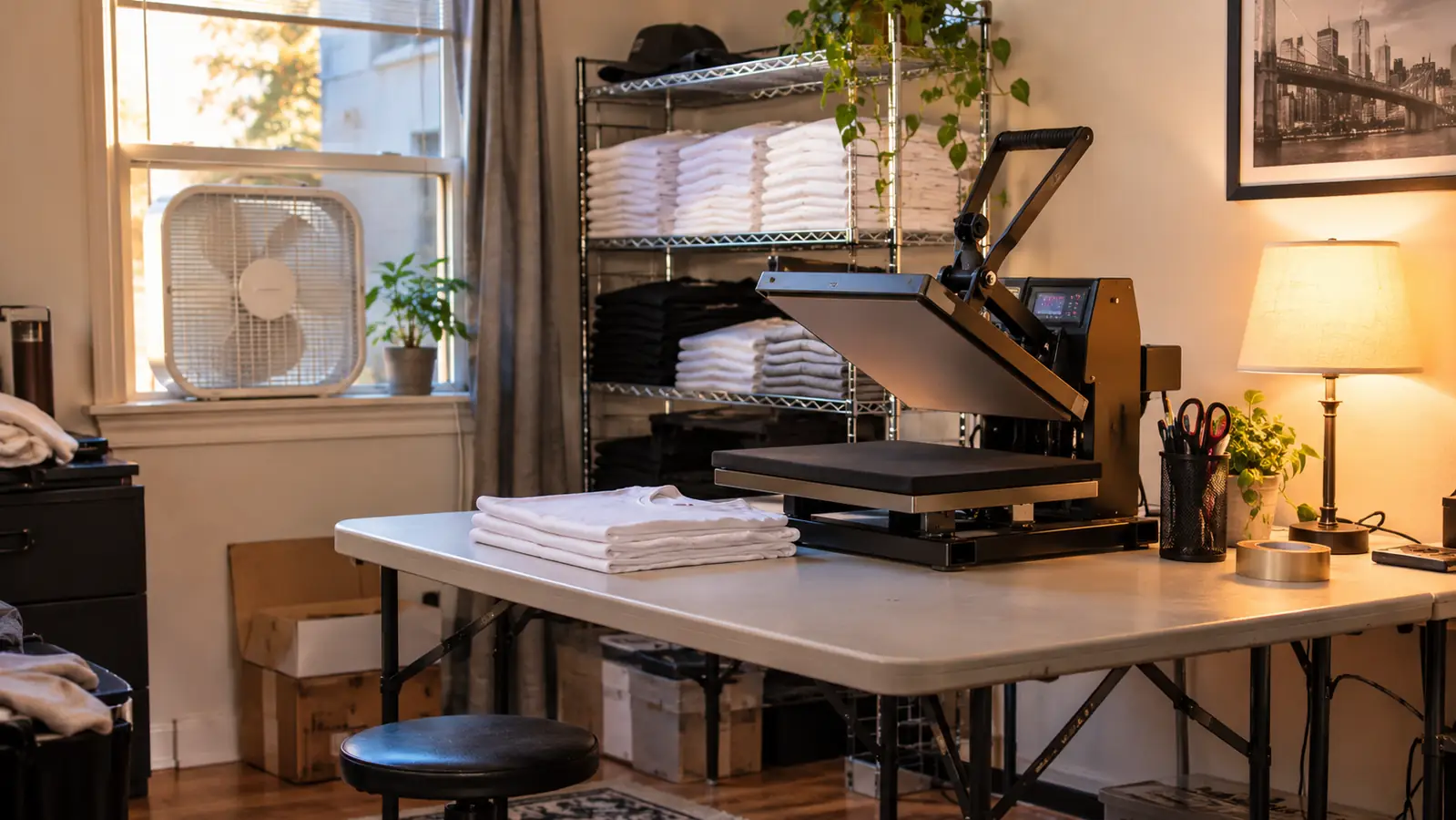
My work is not laboratory work. It is forty reunion shirts with a family name across the chest, two dozen teacher tumblers in May, Little League team gear in April, and a run of holiday mugs every November that I always underestimate. I press on the long folding table in the spare bedroom, with a window fan going because the sublimation process does put something in the air, and my husband Sal folds and bags whatever comes off the table.
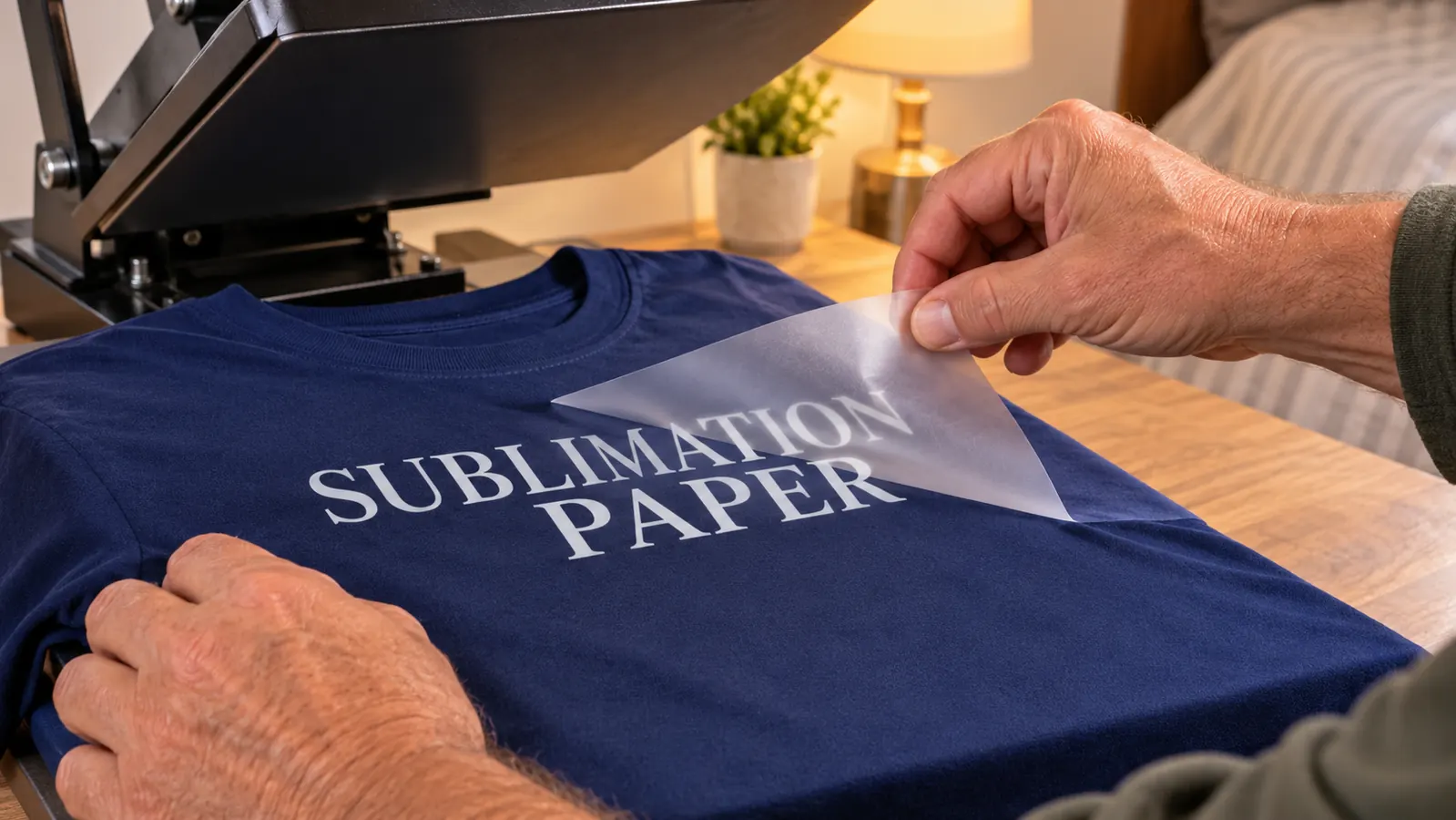
The first real mistake was ghosting. I lifted the press a hair too early to peek, the shirt shifted, and the design printed twice about a quarter inch apart. That one was mine, not the paper's. The second was scorching a polyester tee because I had the press too hot and left it down too long while I answered the phone. Also mine. The third was a genuine paper lesson: I left a pack open on the shelf through a humid July, and the sheets started curling at the corners badly enough that the printer grabbed two at once and jammed.
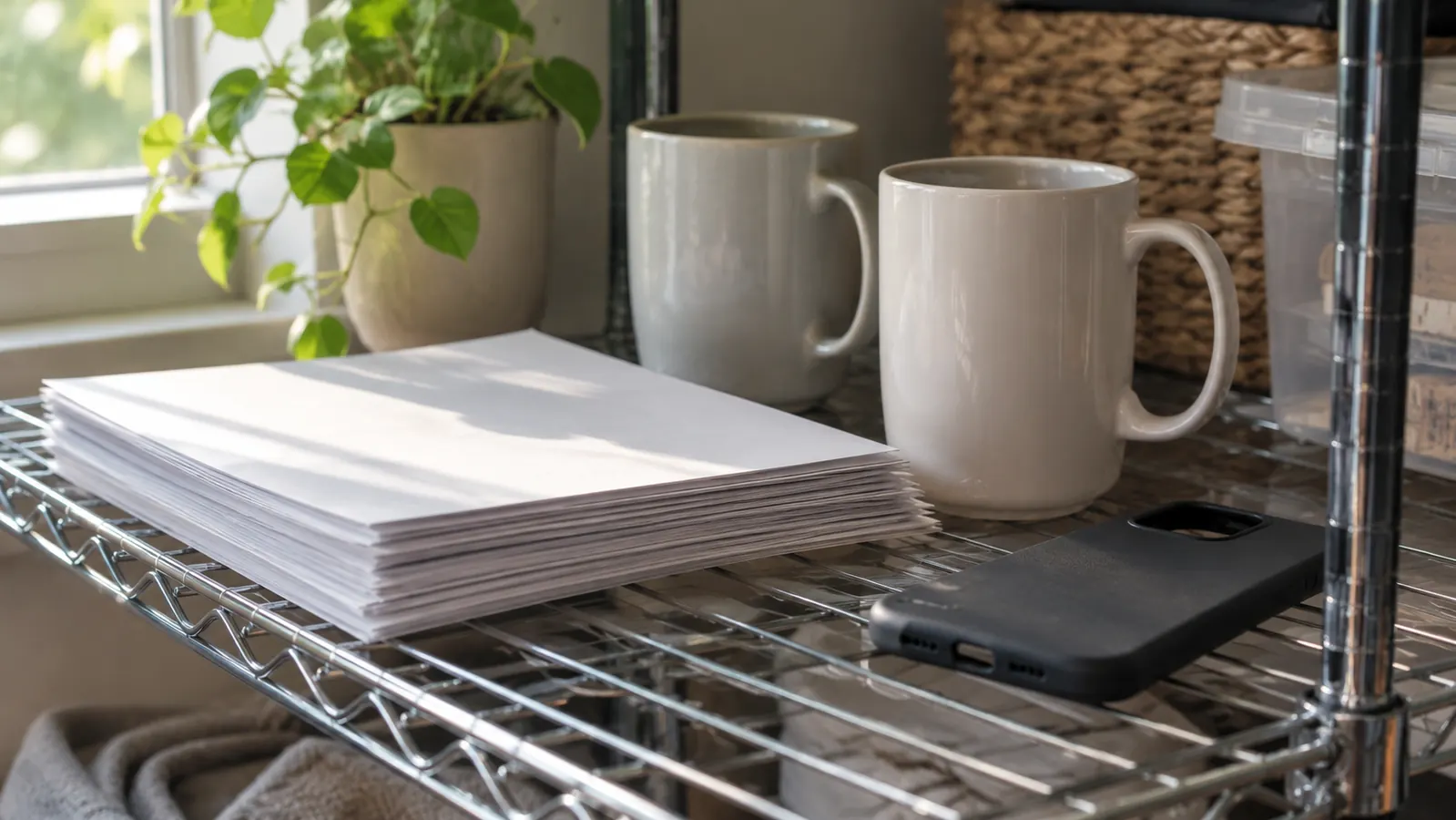
I want to tell you about the Little League order in April, because it taught me more than any tutorial did. Twenty-eight shirts, three sizes, one design with a sponsor logo across the back and a number on the front. I printed the sheets two nights ahead, cut each down to the trim line with a half inch of margin, and stacked them in order on the wire shelf. What I did not account for was that the shelf sits under the window, and the window fan pulls damp evening air right across it. By the second night the top eight sheets had lifted corners. I caught it before the first press, laid them flat under a heavy book for forty minutes, and they fed fine. But I lost the forty minutes, and on a weeknight with a deadline that is a real cost. Now the sheets live in a zip bag on the shelf below, not on top of it, and the fan points the other way.
That is the honest shape of it. In three years of regular use, the times A-SUB paper let me down were almost always a storage or handling problem, and the times it saved me were the boring, unremarkable ones: a sheet feeds, the transfer comes off clean, and forty shirts get done in an evening instead of two.
Forty reunion shirts, one evening, one jam caused by a pack I left open in a humid July. That is the whole honest summary of how this paper has behaved for me.
Where It Genuinely Performs
The transfer rate is the reason I keep buying it. When the press timing is right and the blank is right, the design comes off the sheet almost completely, leaving a faint ghost of the image on the paper and a fully saturated print on the shirt. Cheap paper leaves you with a washed-out transfer and a sheet that still looks half printed. On polyester tees in the light colors I use most, the difference is visible in the first shirt off the table.
Small rigid blanks are where I trust it most. Ceramic mugs, the tile coasters I make as add-ons, and the phone cases my niece talked me into trying all came out clean. The coated surface releases evenly on flat, hard material, which is not always true of thinner sheets that want to buckle under a mug press wrap.
The teacher tumbler run in May is my best argument for it. Twenty-four stainless tumblers, each with a name wrapped around the barrel in a script font and a school logo underneath. Wrap blanks are fussy, because the sheet has to curve without creasing and a crease turns into a bright line in the finished print. I cut each sheet with about an inch of slack, taped it snug, and pressed. Twenty-two of the twenty-four came out clean the first time. The two that did not were my tape slipping, not the paper releasing badly. The ink came off the sheet evenly right across the curve, which is exactly what I want from a coated sheet and what I did not always get from the cheaper packs I tried at the start. At the end of that run I had twenty-four tumblers, a clean table, and not one sheet left half printed. That is the kind of boring result I am paying for.
It also handles fine detail better than I expected. Small text on a teacher tumbler, down around ten point, holds up when the press is hot and even. I have had blurrier results from paper that cost more and had a fancier name on the box. And with 110 sheets in a pack, I am not rationing. I can run a test press, decide the timing is off, and try again without feeling like I am burning through something precious.
One more thing in its favor: it does not smell like much. Some coated sheets give off a sharper chemical smell when they hit a hot platen. This one is mild. In a spare bedroom with a window fan, mild matters.
The Flaws Nobody Puts in the Listing
The curling. Nobody warns you about the curl. A fresh pack is fine, but once a pack is opened and the air gets at it, the corners start to lift and the sheets develop a memory for being bent. A curled sheet is a sheet that feeds crooked or feeds double. My fix is a plastic zip bag with the air pressed out between sessions and a heavy book on top of the stack. That is a workaround, not a feature, and it is the single most common complaint I would expect from anyone who works in a humid climate.
The double feed is the flaw that has cost me the most, so let me be specific about it. It was a Saturday in October, a run of twelve holiday mugs and twenty shirts for a neighbor's shop, and I was loading the printer in a hurry between presses. Two sheets went through together at an angle and the printer stopped dead with the paper folded inside. I pulled it out, but the fold had already dragged a wet streak across the top of one sheet. That one came off the press with a pale line across the design and went straight in the trash. One sheet out of 110 and one blank out of thirty-two is not a catastrophe, but it cost me twenty minutes and a shirt I had already counted. Fanning the stack before every load takes about five seconds. I do it every time now. If you load in a hurry the way I did, budget for one ruined blank every couple of packs and you will not be surprised when it happens.
The paper is also thinner than a heavy cardstock, which means on large solid-color prints on a big shirt, I have had faint edge marking where the sheet did not sit perfectly flat against the blank. Smaller designs do not show it. Big blocky backgrounds do. And the transfer, while strong on the right fabric, is not indestructible. Wash polyester in hot water with a heavy load and you will shorten its life. I tell every customer cool water, inside out, no fabric softener, and I mean it.
What I Liked
- High transfer rate on polyester and rigid blanks, with a faint ghost left on the sheet rather than wasted ink
- 110 sheets to a pack, so test presses and misfires do not feel like a loss
- Holds small text and fine detail well at even press temperatures
- Works across white and light polyester, ceramic, tile, phone cases and metal as the listing states
- Mild smell on a hot platen, which matters in a small home workspace
- Consistent sheet to sheet, so once your timing is dialed in it stays dialed in
Where It Falls Short
- Curls at the corners once a pack is opened and exposed to humid air
- Sheets can cling at the corners and feed double if you do not fan them apart
- Thin enough that large solid-color backgrounds can show faint edge marking
- Not for cotton above 30 percent content and not for dark garments at all
- Only functions with sublimation ink, so a standard printer cannot use it
- Needs dry storage, which means a zip bag and a book if you live somewhere humid
The 30 Percent Cotton Rule, Explained Plainly
This is the part that costs people shirts, so I will be blunt. Sublimation ink turns into gas under heat and bonds with polyester fibers. It does not bond with cotton. So a shirt that is 100 percent cotton will take the print, look fine for about one wash, and then fade to a ghost. The listing's cotton limit of 30 percent is not a suggestion, it is the line where the print stops lasting.
I learned the cotton rule the expensive way, with a bag of shirts I bought before I knew better. They were labeled a poly blend and I assumed blend meant close enough. I pressed six as a test run for a spring craft fair. Out of the press they looked good, honestly good enough to sell. I washed them once on cool and the design went from sharp to soft, and the second wash took most of it off. Six shirts, gone, plus an afternoon. Now I test every new blank before I commit to a batch. One scrap, one small square of a design, one press, one hot wash to hurry the bad news along. If the print holds through a hot wash, it will hold on a customer. If it fades, I find out before I have promised anything to anyone. That costs me one blank and about fifteen minutes, and it has saved me whole orders since. I also read the label twice, once in the store and once at the table, because the same supplier will quietly change the blend between batches.
I buy 100 percent polyester for shirts and I check the label every single time, even on a reorder from the same supplier, because suppliers change blends without telling you. For blends, I test on a scrap first. If the print comes out slightly dull straight off the press, that is your warning. And for dark garments, this paper is simply not the tool. You need a different process entirely. I have turned down dark-shirt orders rather than promise something this paper cannot do.
Who This Is For
This paper suits the home operator doing real, unglamorous volume: the parent making team shirts, the teacher making classroom gifts, the person with a converted printer and a heat press on a folding table who needs 110 reliable sheets and does not want to think about the paper again for a month. It suits polyester apparel in white and light colors, and it suits ceramic, tile, metal and phone cases. If you are organized enough to keep a pack sealed in a bag between sessions, the flaws mostly disappear and you are left with a sheet that transfers cleanly and consistently.
Who Should Skip It
Skip it if your blanks are cotton, if you want to print on dark shirts, or if you are still running standard ink in your printer. Skip it if you want a heavier sheet that lays dead flat out of the pack, because this is not that, and you will fight the curl. And skip it if you cannot store paper dry, because in a humid room an open pack will go soft on you and no amount of press technique fixes a warped sheet. A-SUB is a good honest paper. It is just not every paper, and knowing that up front saves you the Saturday I lost.
If your blanks are polyester and your storage is dry, this is the pack to start with
8.5x11, 110 sheets, coated for sublimation ink only. Confirm the sheet count and today's price, then order once and get on with the shirts.
Amazon Check Today's Price on Amazon →