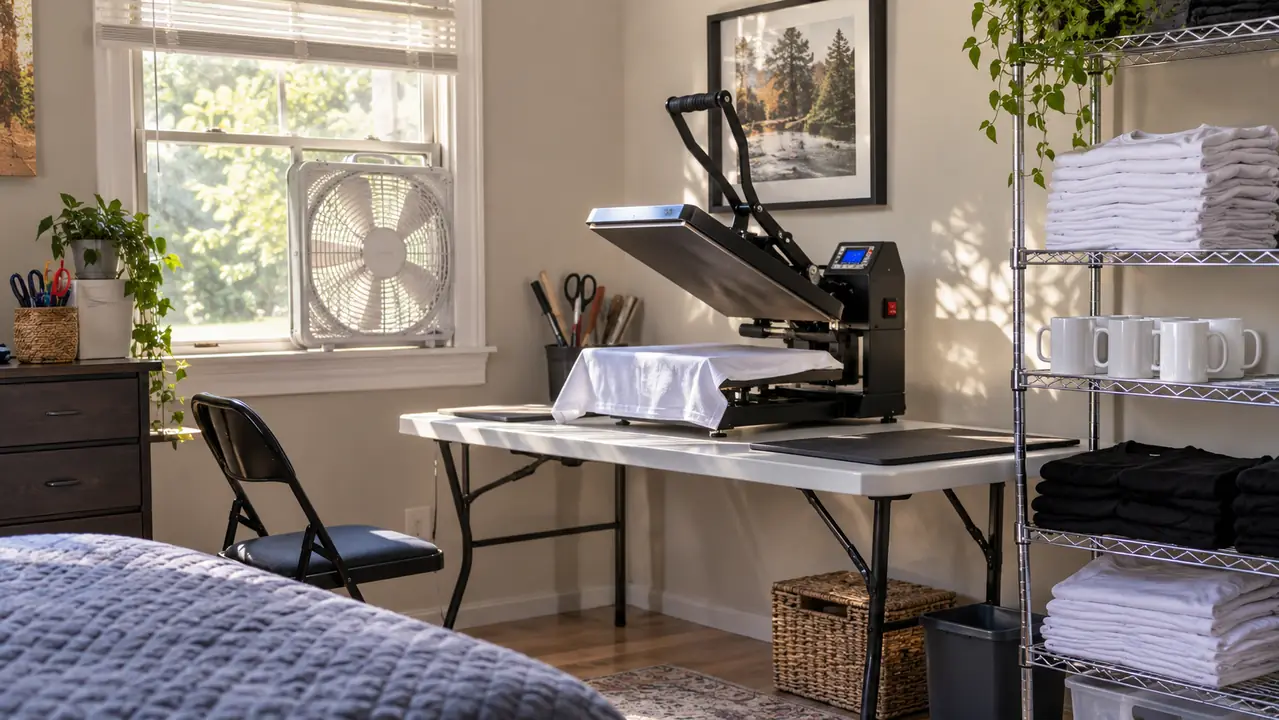
I did not set out to become picky about sublimation paper. Three years ago I was a school office manager with a heat press in the spare bedroom and a first order of family reunion shirts, and I bought whatever paper I could find. Some of it was fine. Some of it left a teacher's tumbler looking like a faded photocopy. The paper I keep on the wire shelf now is A-SUB Sublimation Paper, 8.5 x 11 inches, 110 sheets to a pack, and it is the one I reach for when the order has a name and a date attached. That does not mean every generic pack is junk. It means I learned which jobs I trust to which paper, and I learned it by wasting blanks, not by reading a listing.
Short answer: for repeat orders, teacher tumblers, Little League shirts and anything I plan to sell, A-SUB is the safer default. For a one-off test on a blank I may never use again, a generic pack can still make sense. The difference is not mystery. It is how the sheet feeds, how much ink it releases, and whether the wrapper tells me what I am buying. I press in a spare bedroom in Toms River, New Jersey, with one Epson EcoTank ET-2800 that has only ever had sublimation ink in it. I do not have a lab. I have a folding table, a window fan, a wire shelf of blanks and a husband named Sal who folds and bags orders and wears the test shirts. When I compare papers, that is the room they get compared in.
| A-SUB Sublimation Paper | Generic Sublimation Paper | |
|---|---|---|
| Sheet count and size | 110 sheets, 8.5 x 11 inches, stated on the pack | Count and size can vary, especially on marketplace listings |
| Paper weight and feed | 125 g listing weight, coated finish, stiff enough to feed cleanly | Often lighter and flimsier, with more curl in the tray |
| Transfer on polyester | High transfer rate on white or light polyester and cotton content under 30% | Can work, but results vary from batch to batch |
| Blanks it is listed for | Polyester, cotton blends up to 30% cotton, ceramic, tile, phone cases and metal | Often sold as general purpose with vague blank guidance |
| Curl in my converted EcoTank | Feeds cleanly after I fan the stack | More jams and wasted sheets |
| Buying a small trial pack | The pack I find is 110 sheets | Single packs and mixed lots turn up more often |
| Last minute pickup | I have to plan ahead and order | A local shop may have a pack on the shelf today |
| Best for | Repeat orders and consistent color | Testing a new blank or a one-off craft |
Where A-SUB Wins
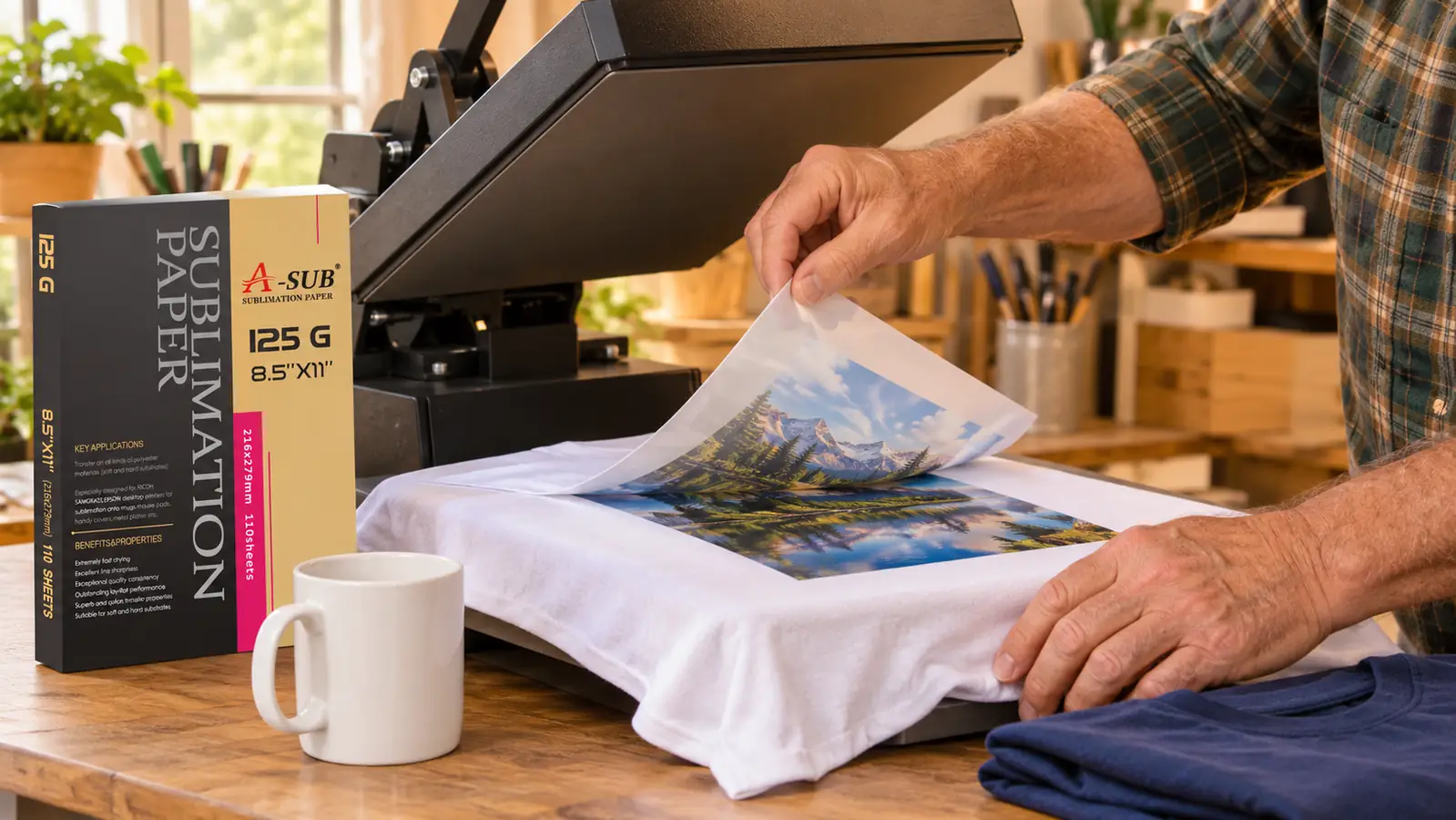
Where A-SUB wins is consistency, and consistency is the whole game when you are selling a set of six teacher tumblers that need to match. The pack states the sheet count, the size, the weight and the ink requirement. That sounds small until you have bought a generic pack with a label that says sublimation paper and nothing else. I know the A-SUB sheet is 8.5 x 11 inches, 110 sheets, with a coated finish and a listed 125 g weight. I know it is meant for white or light polyester, cotton content under 30%, ceramic, tile, phone cases and metal. The listing also states the obvious but necessary part: it only works with sublimation ink, and regular ink does not work. I do not have to guess whether the seller changed suppliers between one order and the next. When I open a pack, I want the paper to be the same as the last pack. A-SUB has been that for me.
The second win is how it behaves in my Epson EcoTank ET-2800. A coated sheet that curls will find the worst possible moment to jam, usually when I have a mug blank warming and a customer waiting on a Saturday morning. A-SUB feeds cleanly for me when I fan the stack first, and the transfer rate is high enough that I am not standing over the press wondering if the image will come up on the second try. I still check every blank. I still waste a sheet now and then. But the waste comes from my timing or my temperature, not from a paper that behaves differently in July than it did in March. For repeat work, that removes a variable I do not want to think about. I have enough variables in a heat press business without adding the paper to the list.
The third win is the range of blanks the listing actually names. A-SUB is listed for white or light colored high quality polyester, material with cotton content at or below 30%, ceramic and tile, phone cases and metal. That covers most of what comes through my door: team shirts, teacher tumblers, a run of photo tiles for a family reunion, and the occasional phone case for a neighbor's teenager. I still test a new blank before I promise it to a customer. The listing is a starting point, not a guarantee. But it is a more useful starting point than a generic wrapper that says sublimation paper and leaves the rest to hope. I have pressed enough blanks to know that hope is not a business plan.
I also like that the paper does not make me feel like I need a second printer just for experiments. My EcoTank is set up for sublimation and nothing else. When I load A-SUB, I know the sheet is coated for the job and the ink is going to release the way I expect. That is not a small thing when one printer has to handle a Little League order on Thursday and a set of holiday mugs on Saturday. The paper is not the star of the show. The blank is. The heat press is. But the paper is the thing that can quietly ruin both, and A-SUB has been the quietest part of my setup for a while now.
Where Generic Sublimation Paper Wins
Where generic paper wins is flexibility. If a neighbor asks me to put a photo on a ceramic tile and I am not sure the tile will take the image, I do not want to open a fresh 110 sheet pack of A-SUB to find out. A single generic pack, or a mixed lot from a local shop, lets me test one blank and walk away if the coating fights me. Generic paper also wins on last-minute pickup. I can plan an A-SUB order around a batch of shirts. I cannot always plan around a Tuesday evening request for one birthday mug. A local pack on the shelf has saved me from an empty-handed apology more than once. That is worth something, even if the paper itself is a question mark.
Generic paper can also be the right choice when the job is a craft project rather than a product. When Sal and I make a test shirt for a new blank supplier, or when a teacher wants one sample before committing to a class set, the paper does not have to carry a brand name. It has to carry an image. I have had generic sheets that pressed perfectly and generic sheets that ghosted, and the difference was often the blank, not the paper. The catch is that I cannot tell which generic sheet I am getting until I open the pack. That is why generic wins the trial and A-SUB wins the repeat order. If I am making one mug for a birthday, I can live with a little uncertainty. If I am making twelve mugs for a teachers' group, I cannot.
There is also a practical limit to how many packs of anything I want on the wire shelf. My press room is a spare bedroom, not a warehouse. A generic pack that is almost right takes up the same space as A-SUB and gives me one more thing to second-guess at nine o'clock at night. I still keep one generic pack around for tests. I do not keep four. The generic paper wins when it is a deliberate test, not when it is the default because I forgot to order the paper I actually trust. That distinction matters more than any label on the wrapper.
I have also learned to write on the generic pack with a marker. Date, blank, temperature and time. That way, when a test goes well, I know which generic sheet did it and whether I can find it again. When a test goes badly, I know what not to repeat. A-SUB does not need that kind of note because the pack is already a known quantity. Generic paper does. That is not a knock on generic paper. It is just the work that comes with an unknown sheet. If you are willing to do the note-taking, generic can teach you a lot about your blanks without using up your good paper.
Want the paper I trust for orders I get paid for? See A-SUB on Amazon
The 8.5 x 11 inch, 110 sheet pack is the one on my wire shelf for teacher tumblers, team shirts and holiday mugs. It is listed for white or light polyester, cotton blends up to 30% cotton, ceramic, tile, phone cases and metal. Check the current listing and confirm the size and sheet count before you buy.
Amazon Check A-SUB Sublimation Paper on Amazon →
Who Should Buy Which
Buy A-SUB if you take repeat orders and you are tired of explaining why the second tumbler is a little lighter than the first. It suits a home press setup like mine, where one printer and one heat press have to handle shirts, mugs, tiles and phone cases without a lot of fussing. It also suits anyone who wants the pack to tell them the sheet size, count, weight and ink requirement before they spend an evening on a project. The 110 sheet pack is not a sampler. It is a supply pack, and it makes sense when you know you will use it. If you sell six mugs to a teachers' group, you will use it. If you press one shirt for a birthday party, you may not.
Buy generic if you are testing a new blank, buying for a single craft afternoon, or stuck without paper on a day when a local shop is open. Do not buy generic for a set of six matching tumblers unless you have already tested that exact pack on that exact blank. I learned that the hard way with a teacher order that went out with two mugs that looked like they had been through a wash cycle before the customer ever used them. The generic paper was not evil. It was just unknown. Unknown is fine for a test. Unknown is a problem when it is a paid order, and it is a bigger problem when the customer is a neighbor you will see at the grocery store.
If you are new to sublimation, start with a small test before you buy a case of anything. Press one blank you do not care about. Write down the paper, the temperature, the time and the blank. Then press a second blank from the same pack. If both come out the same, you have a paper you can trust for that job. If they do not, you have a paper for crafts and a reason to keep looking. That advice applies to A-SUB too. I trust it because I have used it, not because the listing says 4.8 stars from more than 54,000 reviews. Reviews are useful. Your own second press is more useful.
Keep the repeat orders on the paper you do not have to babysit
A-SUB Sublimation Paper, 8.5 x 11 inches, 110 sheets, for white or light polyester, cotton blends up to 30% cotton, ceramic, tile, phone cases and metal. It only works with sublimation ink. Confirm your blank and your ink before you press.
Amazon See the A-SUB listing on Amazon →