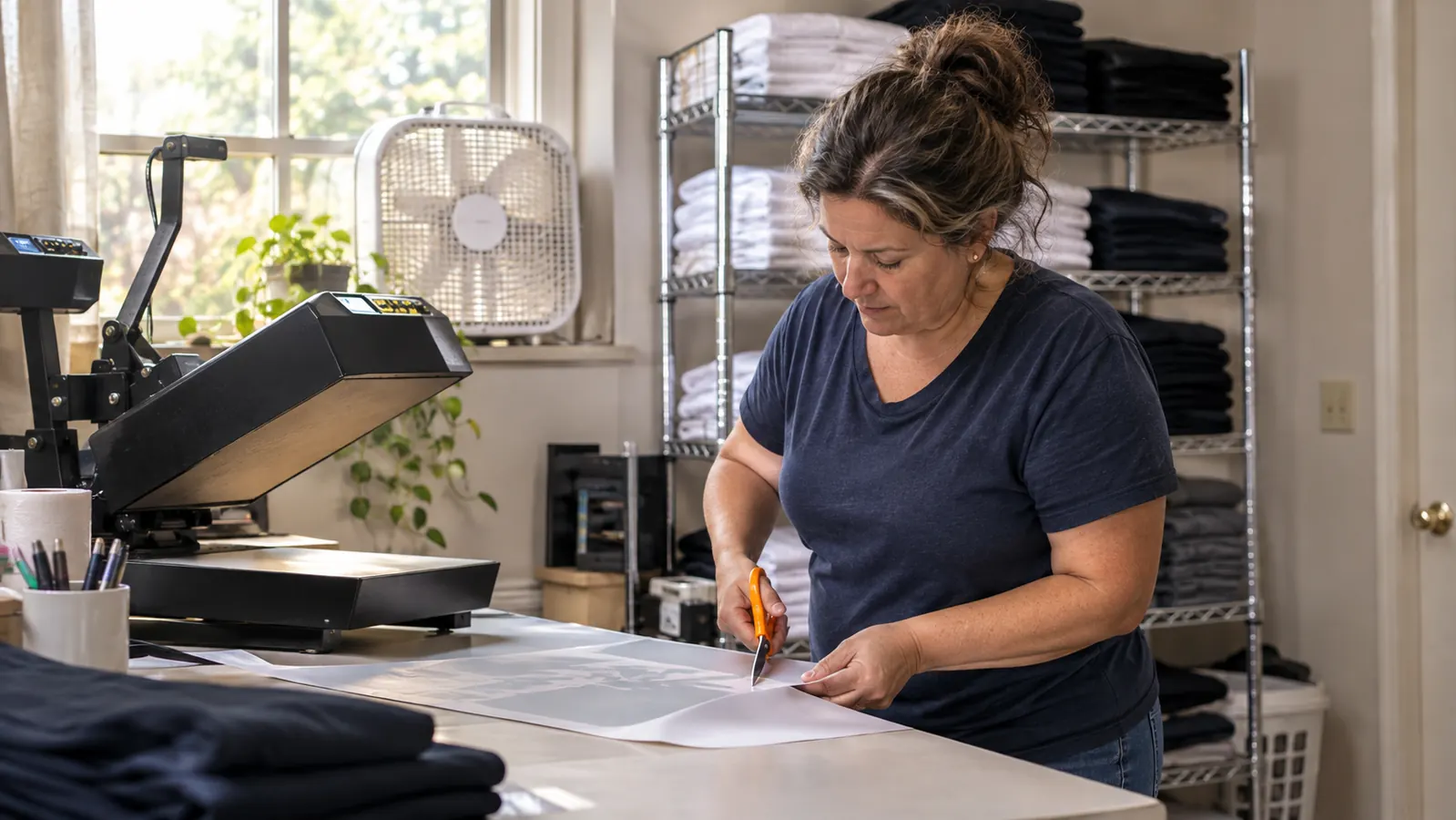
Three years of sublimation orders out of a spare bedroom in Toms River taught me one expensive lesson: the paper is not the place to save. I have pressed family reunion shirts, teacher tumblers, Little League gear and a pile of holiday mugs, and the failures that hurt were almost never the press or the blanks. They were sheets that released unevenly, curled in the feed tray, or dropped half the detail on a name I had already promised by Friday. A-SUB Sublimation Paper is the pack I keep coming back to, and the reason is simple. It protects the blanks underneath it.
A blank shirt costs money, a mug blank costs money, and a ruined one costs the time to reorder plus the apology to whoever was waiting. When a sheet costs less than the blank under it, saving on the sheet is a losing trade. That is the whole case for paying attention to paper, and it is the reason for this list. Ten things, in the order I would tell a friend who just carried a press up the stairs.
The paper that stopped costing me blanks
110 sheets of 8.5 by 11, coated, made for sublimation ink. It is the pack I keep on the shelf above the press for anything with a deadline.
Amazon Check Today's Price on Amazon →It keeps your first press from becoming a test press
The listing claims a high transfer rate, and what that means at my table is that the first shirt in a run comes out like the tenth. Before A-SUB I ran a sacrificial blank on every new design to check density, which meant a shirt in the trash before I had sold one. Now the check happens on a scrap of the same paper and the first real blank goes to a customer. Across a season of teacher shirts, that is a shelf of blanks I did not burn.
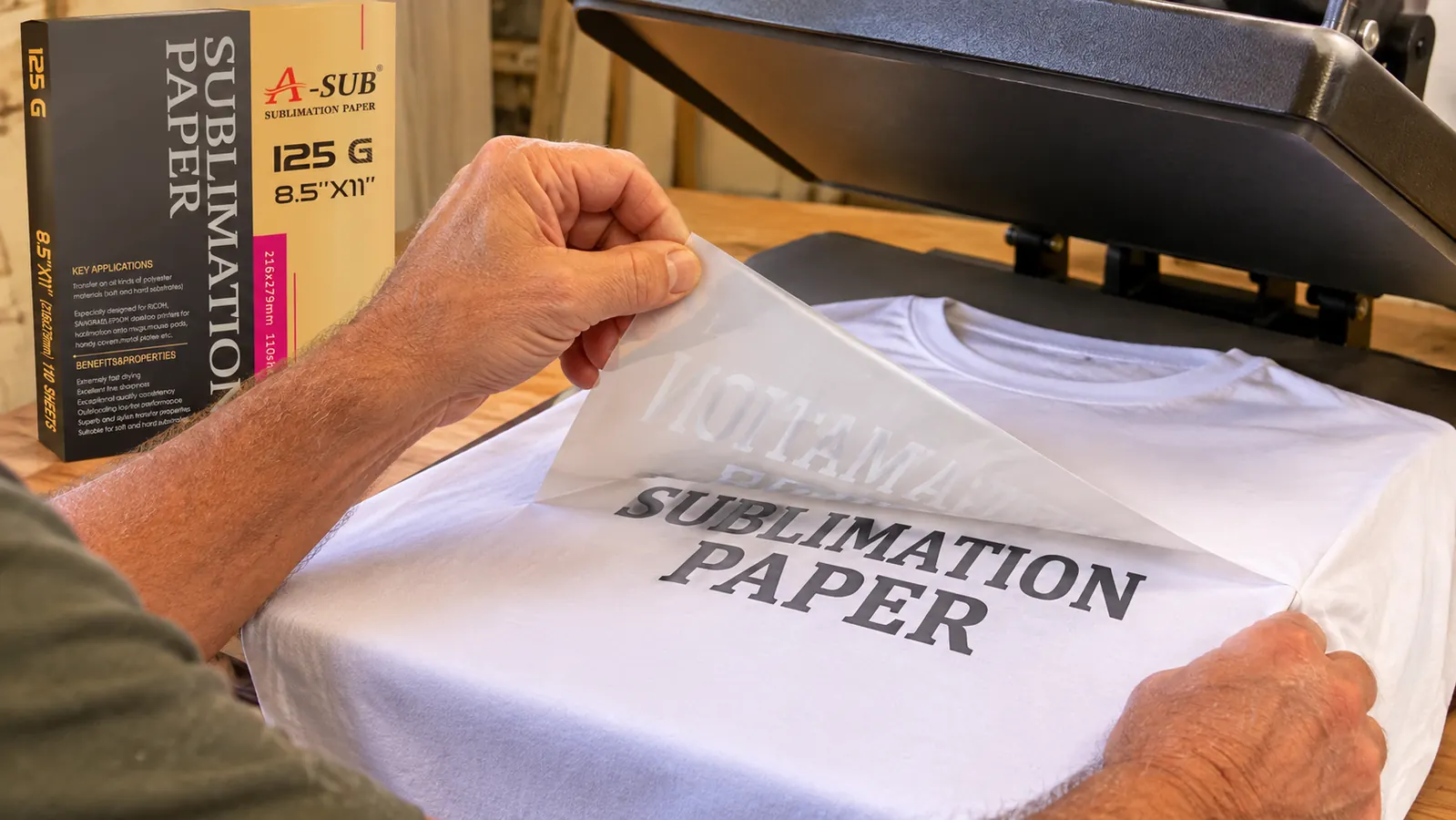
One pack prints the same way from the top sheet to the last
110 sheets in one pack, coated on the print side, cut the same size. That sounds boring and it is exactly what I want. The generic packs I tried early on had sheets that printed beautifully and sheets that laid down thin, and I could not tell which was which until the press was closed. With a consistent sheet I stopped blaming my printer settings for problems that were really paper problems, and I stopped replacing blanks while I chased a problem that was never the blank.
Small type survives the press, so class lists do not get redone
Two teachers' groups order tumblers with their class lists on them, small type and thin lines. A cheap sheet transfers the big shapes and loses the comma in a name. The A-SUB sheet holds that detail because the coating takes the ink evenly instead of pooling it. I check the first tumbler of every order under the kitchen light and I have not had to redo a class list since I switched. Redoing a set of 24 tumblers is not a small thing in a spare bedroom.
Clean edges on outlined logos and boxed numbers
The sheet is coated, and the practical difference shows up on tight borders and small logos. Cheap paper let the ink creep past the edge of a design, so a shirt with a boxed logo came out looking like the box had been drawn by hand. I press a lot of Little League gear with outlined numbers, and clean edges mean I am not remaking a size because the outline bled into the fabric and turned a nine into a blur.
It feeds flat instead of curling and jamming mid-page
The 8.5 by 11 sheet goes through my EcoTank ET-2800 without curling at the corner and jamming halfway down the page. A jam is not just annoying, it is a half printed sheet and a wasted pass. I load one sheet at a time for anything with a deadline and the A-SUB sheets sit flat in the tray. The one time I got lazy and stacked a whole wad of a cheaper brand, I spent twenty minutes fishing crumpled paper out of the feed path.
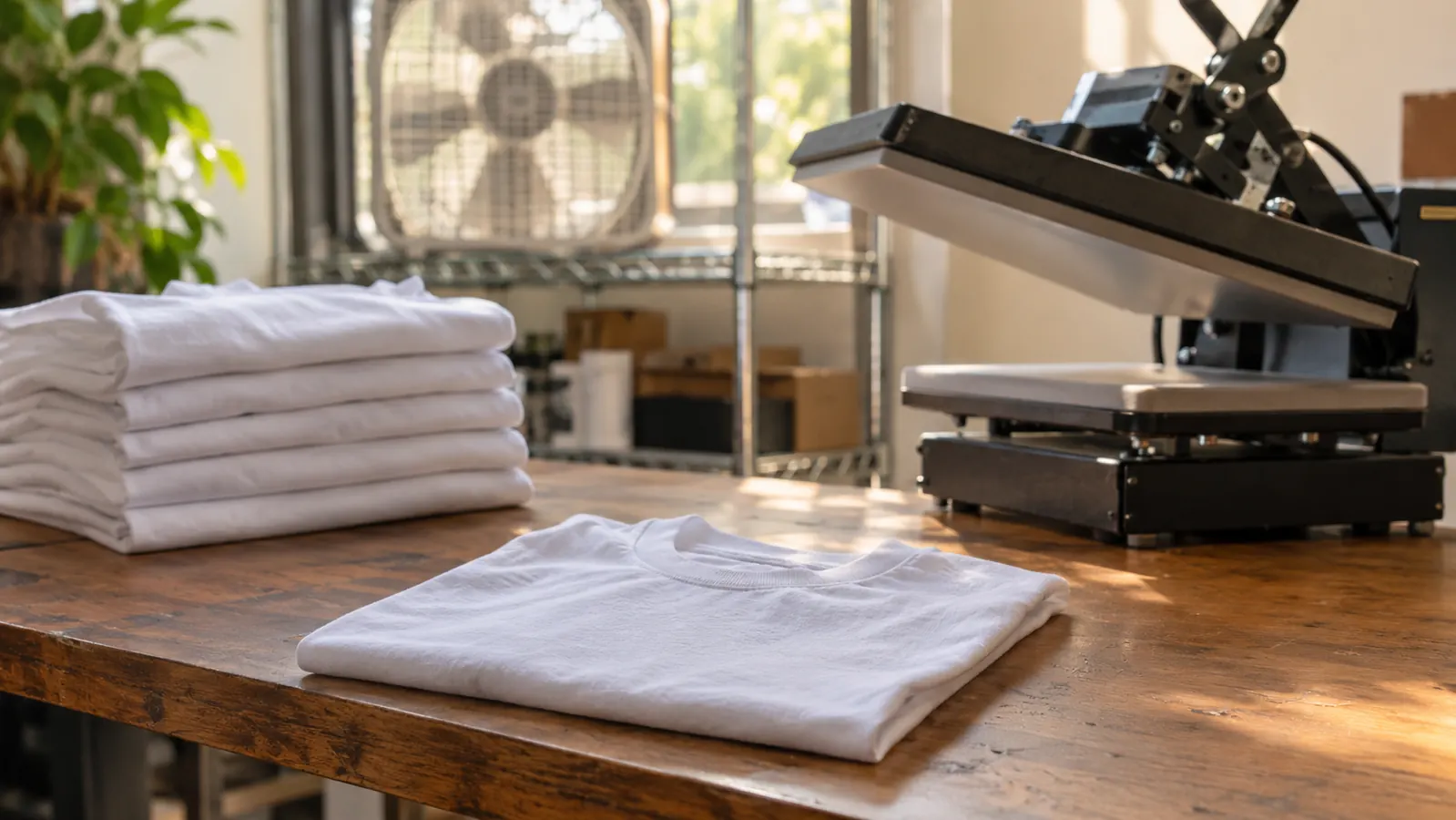
Standard letter size fits the whole shirt panel with room to tape
8.5 by 11 covers a full shirt panel with room for tape, and I cut it down for mugs and small items. Because it is standard letter size, I am not hunting a specialty trim or buying a size that fits one blank only. The sheets cut cleanly on a trimmer with no ragged edge that catches in the printer. That sounds like nothing until you have fed a ragged edge through a printer you depend on.
One paper covers the materials already on my shelf
Per the listing, the paper works with light colored high quality polyester, cotton content up to 30 percent, ceramic and tile, phone cases and metal. That covers nearly everything in the press room: poly shirts, the cotton blend totes I do for a neighbor's shop, mugs, and the tile coasters my sister talked me into making. One paper across the whole shelf means one fewer variable when something goes wrong at eleven at night.
It stops you from cooking a blank to force a transfer
When a transfer comes out faint, the temptation is to press the same shirt again, hotter and longer. That is how polyester scorches and how a shirt picks up a shine mark across the shoulder. Because the A-SUB sheet releases properly the first time, I am not inclined to double press. The one shirt I scorched this year happened with a cheap sheet I was trying to use up, and I should have thrown it in the recycling instead.
Repeat orders come out matching the first run
My Etsy orders are small and they repeat: the same mug design, the same shirt in three sizes, the same set of coasters. Repeat work only pays if the second run matches the first. Same paper, same press, same time, same result. I keep the A-SUB pack on the shelf above the press and I do not mix brands mid order, because a different sheet is a different variable and I have been burned by that before.
110 sheets tells you how many blanks you can commit to
The sheet count is the useful number here. 110 sheets per pack tells me roughly how many blanks I can promise before I need to reorder. I count the pack when it arrives, write the number on the flap and I know where I stand for the next batch of reunion shirts. That is not exciting. It is the difference between saying yes to an order on a Tuesday and finding out on Thursday that I am out of paper.
What I'd Skip
The paper will not fix a bad color profile, and it will not turn a printer that has only ever had regular ink into a sublimation printer. The listing says it plainly: it only works with sublimation ink. It also will not save a blank that is 100 percent cotton, because nothing will. I would not buy a case of anything before running one pack through your own feed path, since paper behaves differently in different printers. And if you are the type to leave a stack sitting in the tray for a month, expect to flatten it before you print.
The failures that hurt were never the press. They were sheets that curled in the tray and dropped half the detail on a name I had already promised by Friday.
Buy the paper before you buy more blanks
110 sheets, 8.5 by 11, coated, for sublimation ink only. It is the part of the job you can settle before the blank ever touches the press.
Amazon Check Today's Price on Amazon →