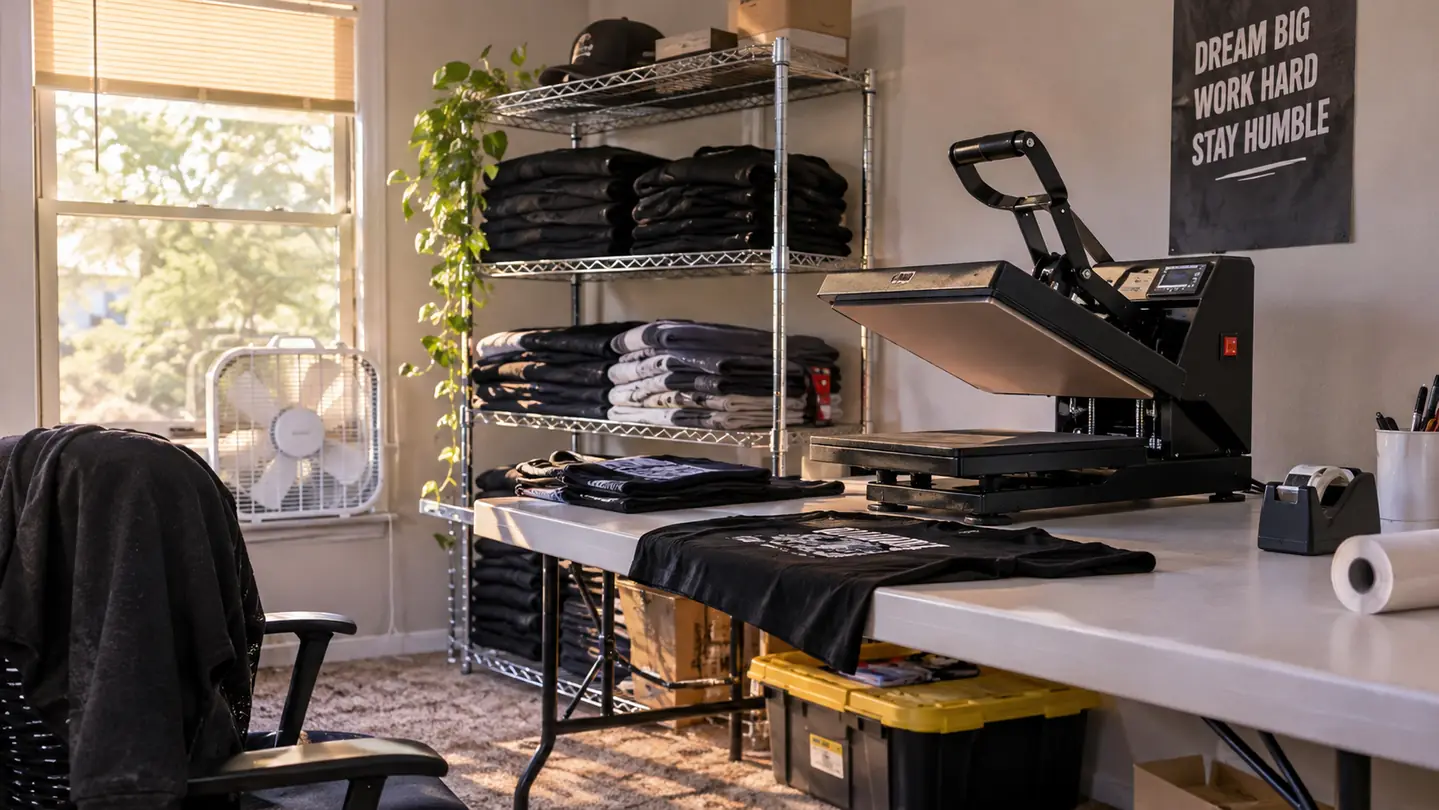
The first order I pressed with A-SUB paper was forty-one family reunion shirts for my cousin Donna's side of the family, and I had one weekend to get them done. My spare bedroom in Toms River looked like a laundry avalanche. Sal was sorting shirts into piles on the bed so I could get to the press, the window fan was pulling air through the room, and I was down to my last few sheets of the paper I had been using, the kind that made me hold my breath every time I peeled a print off a hot shirt.
I switched to A-SUB that weekend because a woman in one of the sublimation groups posted a photo of a peel with no ghosting on it at all, and I am easily persuaded by a clean peel. Months and a lot of orders later, I have run somewhere north of six hundred sheets through the Epson EcoTank ET-2800 on tumblers, mugs, teacher shirts, Little League hoodies and a run of coated phone cases for a neighbor's craft table. Here is what this paper does well, where it makes you work, and who should not buy it.
The Quick Verdict
Clean, even transfers on light polyester and a peel that rarely ghosts. It curls in humid weather and the last sheets in a pack want to feed crooked, so load it with a little patience.
Amazon Check Today's Price →The paper that stopped making me nervous before every press
8.5 by 11 inches, 110 sheets to a pack, coated for sublimation ink only. This is the stack that lives on my wire shelf now.
Amazon Check Today's Price on Amazon →How I've Used It
My setup is not fancy. One long folding table, a heat press, the EcoTank, a window fan that runs the entire time I am working, and a wire shelf of blanks against the wall. I mention it because this paper does not get babied in my house. It sits out in the open air of a room with a fan pulling through it, and New Jersey summer humidity gets into everything on that shelf.
Most of what I press is light colored polyester. Teacher shirts from a three pack of poly blends, Little League hoodies, and the reunion shirts, which were a light blue poly cotton with a cotton content well under the 30% ceiling the listing gives. On those, the transfer is clean. The colors come off the sheet dense and even, and the fabric stays soft to the touch, which matters when a teacher has to wear the thing through a full day of field day and then sit in a car with it on.
I also run ceramic mugs and the coated phone cases. The paper handles the small stuff well because it takes a close trim without the coating flaking at the cut edge. I trim tight for mugs and leave a small margin for cases, and both have held up through dishwasher cycles and a few months of pocket life.
The other thing I use it for is test prints. When a teacher sends me a design at nine at night and wants to see it on a shirt before her team commits to twenty, I press one shirt and one sheet. It is a small enough sheet that I do not feel wasteful running a single proof, and the proof looks the same as the twentieth shirt will, which is the entire point of a proof.
In April the Little League order landed: thirty-eight hoodies, half in youth large and half in adult medium, all light grey. Youth sizes are the ones that taught me to trim tighter than feels necessary. A nine-year-old's chest panel is small, and a design with a lot of white space around the logo will drift onto the seams if you leave a wide margin. I trimmed those sheets to about a quarter inch of border, pressed them at my usual setting, and every one of the thirty-eight came off clean. The grey was light enough that the paper never fought the fabric. If those hoodies had been navy, I would have had a very different conversation with a coach.
What You Actually Get in the Pack
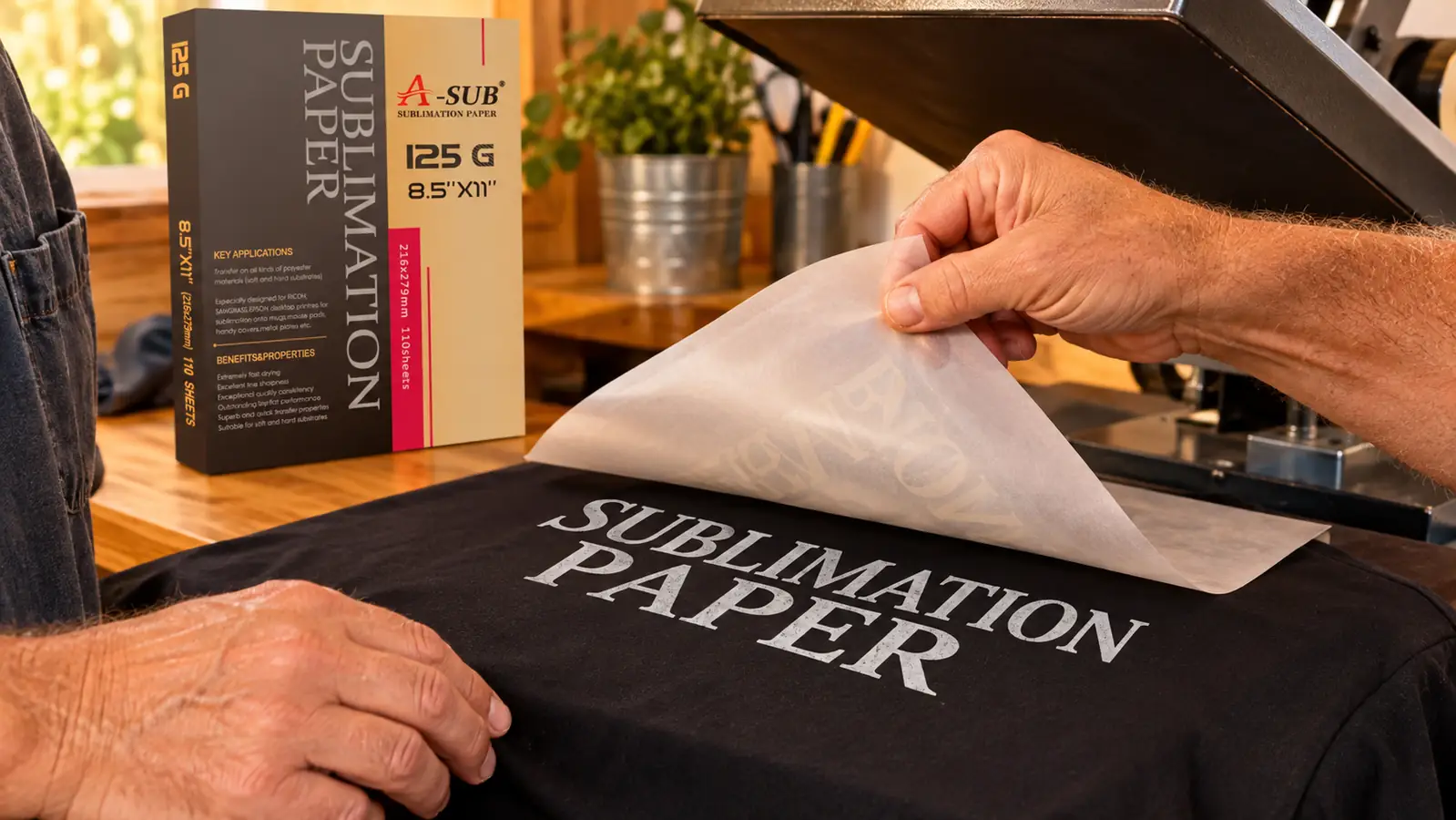
The pack is 110 sheets at 8.5 by 11 inches, which feeds straight into a standard desktop printer without any trimming first. The listing gives the paper weight as 120, a coated finish, an item weight of 125 grams and a high transfer rate. In plain terms, it takes the ink well and gives most of it back when you press. The listing also carries 54,165 ratings at 4.8 stars, which tells you this is not some obscure corner of the market that only three people have tried.
The compatibility note is the part people skip, so here it is plainly. This paper works with sublimation ink only. Regular ink does not work, not even a little. If you have not converted your printer, you will get a faint washed out image and blame the paper. It is also meant for white or light colored high quality polyester, materials with a cotton content of 30% or less, plus coated ceramic, tile, phone cases and metal. Press it on a dark cotton shirt and you will get a ghost of an image and a bad mood.
How It Behaves on a Real Order
The peel is where this paper earns its keep. On a properly pressed polyester shirt the sheet lifts away clean, and the print underneath is sharp at the edges with no halo. That should be the bare minimum for sublimation paper. It is not. The paper I started with left a faint double edge on maybe one shirt in ten, and it was always the shirt I cared most about, the one for the person organizing the whole order.
The honest complaint is curl. In July, with the fan going and the window open, the top sheet of the stack bows up like it is trying to leave. I keep the pack flat on the shelf with a blank laying on top of it, and I fan the stack a little before I load the tray. That is not a defect, it is paper sitting in humidity, but it does mean the last ten sheets in a pack need attention when you feed them.
Ghosting has been close to zero for me. The two prints I pulled that had a faint double edge were both my own fault, one from a shirt that shifted under the press and one from a print I left sitting on the table for two days before I pressed it. Neither one was the paper failing. The colors on both were still correct, which is the part that surprised me, because the paper I used before would have given me a patchy, washed out result and a half hour of guessing.
The mug order that convinced me was a set of twelve for a teacher's retirement in March. Twelve mugs, twelve sheets, one evening at the folding table. Mugs are where a weak paper shows itself, because the wrap carries the print around a curve and any thin spot in the coating turns into a pale patch near the handle. All twelve came off the press with the same density. I checked them one at a time under the kitchen light, which Sal will tell you is my version of a nervous habit, and there was no streaking on any of them. The sheets trimmed down to the wrap size without the cut edge flaking, and that flaking is the exact failure that made me stop using my first paper for mugs.
Six hundred sheets in, the only ghosted print I have pulled off the press came from a shirt that moved, not from a sheet that failed.
Where It Fought Me
The first place is the paper tray. If I load the whole stack, the last few sheets want to go in crooked and I get a print that is a quarter inch off center. Loading ten or fifteen sheets at a time fixed it completely. That is a small annoyance, not a reason to avoid the paper, but if you load the entire pack and get a crooked print, you will think the paper is the problem when it is really the stack.
The second place was a batch of light gold hoodies that had more cotton in them than I realized. The print came out muted and slightly washed, and I spent a good hour blaming the paper before I checked the tag. That was on me. The listing tells you the ceiling and I did not check it on that order. I reordered the hoodies in a higher polyester blend, and the same paper pressed them perfectly the following week, which is how I learned to read tags before I load a tray.
The curl also bit me once in a way that cost real time. I had a Saturday morning run of twenty shirts for a neighbor's craft show, and I loaded the tray with what I assumed was a flat stack because I had left the pack on the shelf overnight with nothing weighing it down. The third sheet fed at an angle, the printer grabbed it crooked, and the print came out rotated just enough that the design sat low on the chest. I caught it before it hit the press, but I lost about fifteen minutes reprinting and re-trimming. Ten minutes of holding the pack flat under a blank would have saved the whole thing. That is the entire lesson, and I keep relearning it every July.
What I Liked
- Clean, even transfers on light polyester and poly cotton blends under the cotton ceiling
- Takes a close trim without the coating flaking at the cut edge, which matters on mugs and cases
- 110 sheets at 8.5 by 11 inches means no trimming before it goes in the tray
- Consistent from the first sheet of the pack to the last once you manage the curl
Where It Falls Short
- Curling in humid weather, especially the top and bottom sheets of the stack
- Not forgiving if you press outside the material range listed on the pack
- Sublimation ink only, so a converted printer is not optional
- The last sheets in a pack want to feed crooked if you load the tray to the top
The Small Things That Saved Me Rework
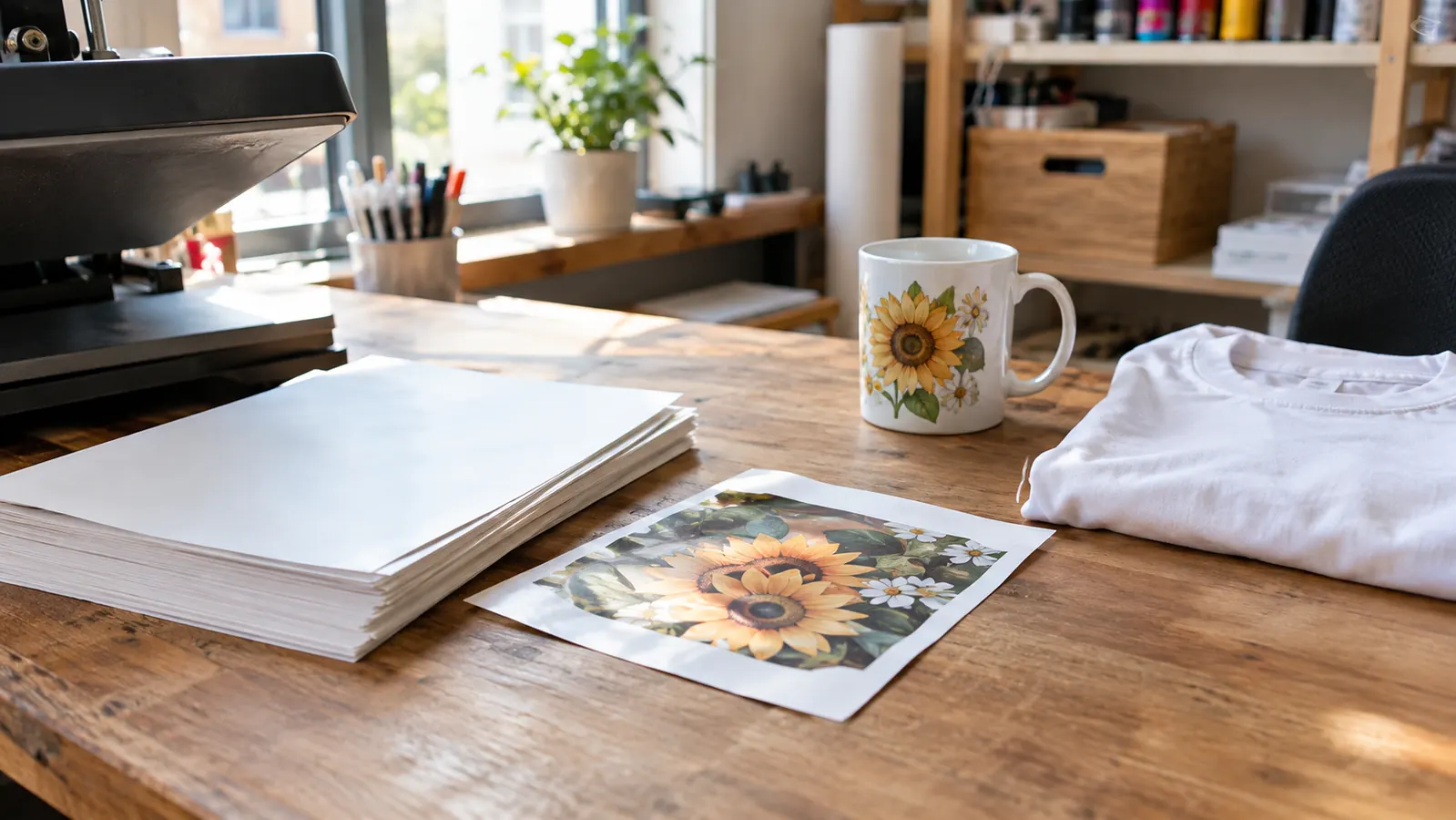
Two habits came out of the months I have spent with this paper, and both saved me more time than any gadget I have bought. The first is that I keep the pack flat and weighted with a blank on top, all the time, not just in summer. The second is that I load the tray in short stacks instead of dumping the whole pack in. Neither of those is in the listing. Both of them turned a paper that occasionally annoyed me into a paper I do not think about.
The third habit is checking the blend on every blank before I print anything, which I should have been doing years ago. Most of what I press is polyester or a blend well under the cotton ceiling, so this paper is the right tool. When someone hands me a shirt from a big box store and says it is a poly blend, I look at the tag now. If it is over that ceiling, I say so at the counter and offer a different blank, and the order stops being a reprint waiting to happen.
I also keep a cheap hygrometer on the wire shelf now, the kind with a needle that people put in a terrarium. It does not fix anything, but it tells me when the room is running above sixty percent and I need to be slower and more careful with the stack. In August it reads high most days. In January it reads low and the paper behaves like a completely different product, flat and easy to feed. Same pack, same press, same hands, different air. Knowing which kind of day I am having before I load the first sheet has saved me more reprints than any setting on the press.
What I Tried Before This
I started with a multipurpose looking sublimation paper that came in a plain box with no material list on it. It worked. It also left a faint double edge on roughly one shirt in ten, and the prints came out a shade lighter than the file on my screen, so I found myself over saturating every design to compensate. When you are pressing forty shirts in one weekend, compensating is a bad habit to build.
The difference with A-SUB was not dramatic on the first shirt. It was dramatic on the fortieth, because I had stopped checking every peel like it was a final exam. I wrote up the longer side by side in the comparison on this site, and there is a shorter piece on how good paper saves your blanks if you are still deciding whether the paper matters at all.
Who This Is For
This is for the person with a converted printer and a heat press who is pressing light polyester, poly cotton blends, mugs, coated ceramic or phone cases, and who wants a paper that behaves the same on sheet one and sheet one hundred and ten. It suits a small home shop taking real orders, the kind where a crooked print means a redo and a redo means a Tuesday night on the press instead of the couch. It also suits a beginner who has not yet learned that the paper is half of the result and assumes every bad print is a heat press problem.
Who Should Skip It
Skip it if you are pressing dark cotton, because nothing about this paper will change that. Skip it if you have a regular inkjet that has never been converted, because this paper will do nothing for you and the review you leave will really be a printer review. Skip it if you only press twice a year and want one product that covers every job, because no sublimation paper covers every job and buying on that hope is how a shelf ends up crowded with half used packs. And if you are pressing a hundred shirts a week, you already know what you like and you are not reading this.
One less thing to think about on the next order
8.5 by 11 inches, 110 sheets, coated for sublimation ink. Keep the pack flat, load the tray in short stacks, and check the blend on your blanks before you press.
Amazon Check Today's Price on Amazon →