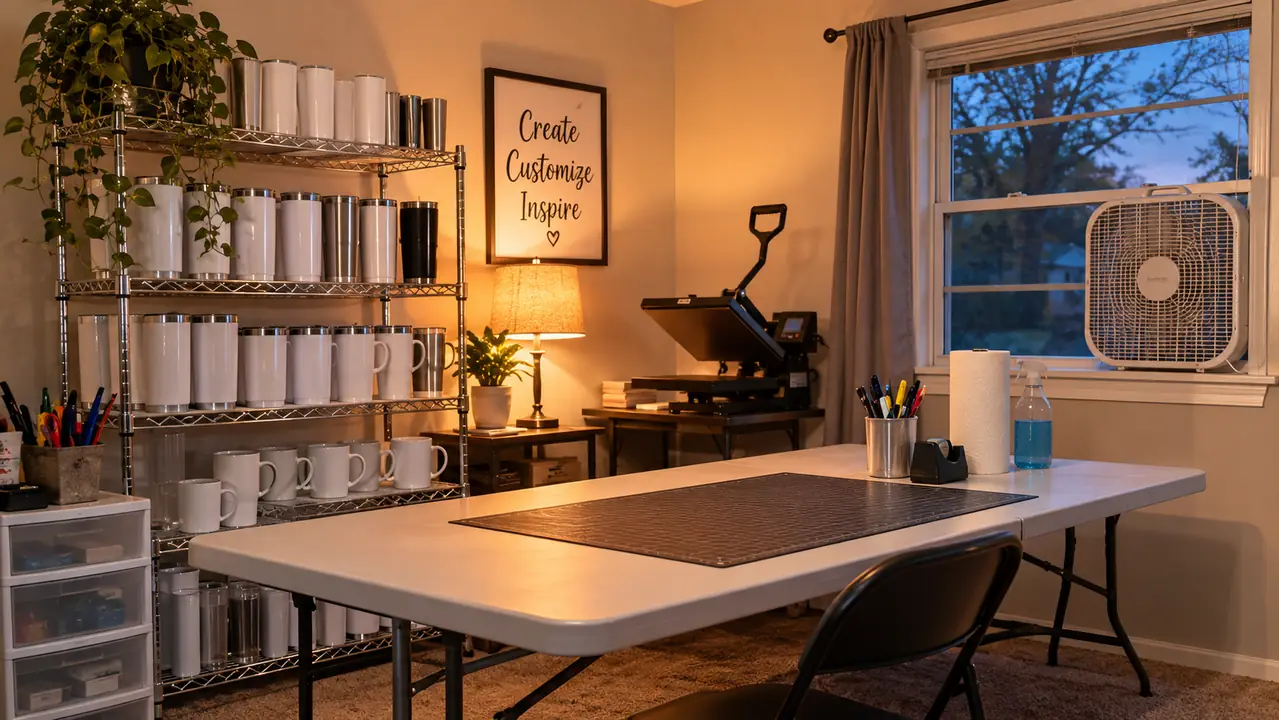
Two years ago my sublimation setup was the oven in my kitchen, a roll of shrink wrap and a pair of tongs. I had four teacher tumblers due on a Friday and I scorched the paper on two of them before I got one clean. That was the week I started reading about presses. Now there is an HTVRONT Auto Tumbler Heat Press sitting on the folding table in my spare bedroom, the oven is back to making meatloaf, and I get asked the same question at every craft fair: which one should I buy first. The honest answer depends on what your orders look like, so here is the comparison I wish somebody had handed me, from a woman who has ruined blanks on both sides of it.
The short answer first. If what you sell is drinkware, the HTVRONT press wins on consistency and on not eating your blanks. If you make a mixed bag of things, mugs one week and tiles and ornaments the next, or you already own a convection oven and there is no room in the budget for a second machine, the oven still earns its keep. They are not really fighting for the same job. One is a repeatable single item tool. The other is a hot box that does not care what shape you hand it.
| HTVRONT Auto Tumbler Heat Press | Convection Oven | |
|---|---|---|
| How pressure gets applied | The heat pad presses the wrap against the blank from the inside, one tumbler at a time | Shrink wrap or a silicone sleeve squeezes the paper on and you hope it is even |
| Throughput | One blank per cycle | Several wrapped blanks can share the heat |
| Repeatability | Same temperature and same time every cycle, set on the machine | Varies with shelf position and how tight you wrapped it |
| Sizes it handles | Drinkware 2.9 to 3.2 inches across, 280 ml to 850 ml | Anything that fits on a tray |
| Consumables | Paper and tape only | Shrink wrap or a sleeve on every run |
| Where it lives | Spare bedroom table, 12.9 by 10.9 by 6.3 inches, 4.92 kg | The kitchen, next to the food |
| Cost of entry | A machine you buy on purpose | Nothing extra if one is already in the kitchen |
| Best for | Repeat drinkware orders | Mixed shapes and one-off batches |
One more thing before the detail. I am not going to pretend the press is a business in a box. It is a tool that makes the last three inches of the job repeatable, and the rest of the job is still printing, taping, packing and answering messages at ten at night. What it buys you is fewer do-overs. In this house that was worth the shelf space.
Where the HTVRONT Press Wins
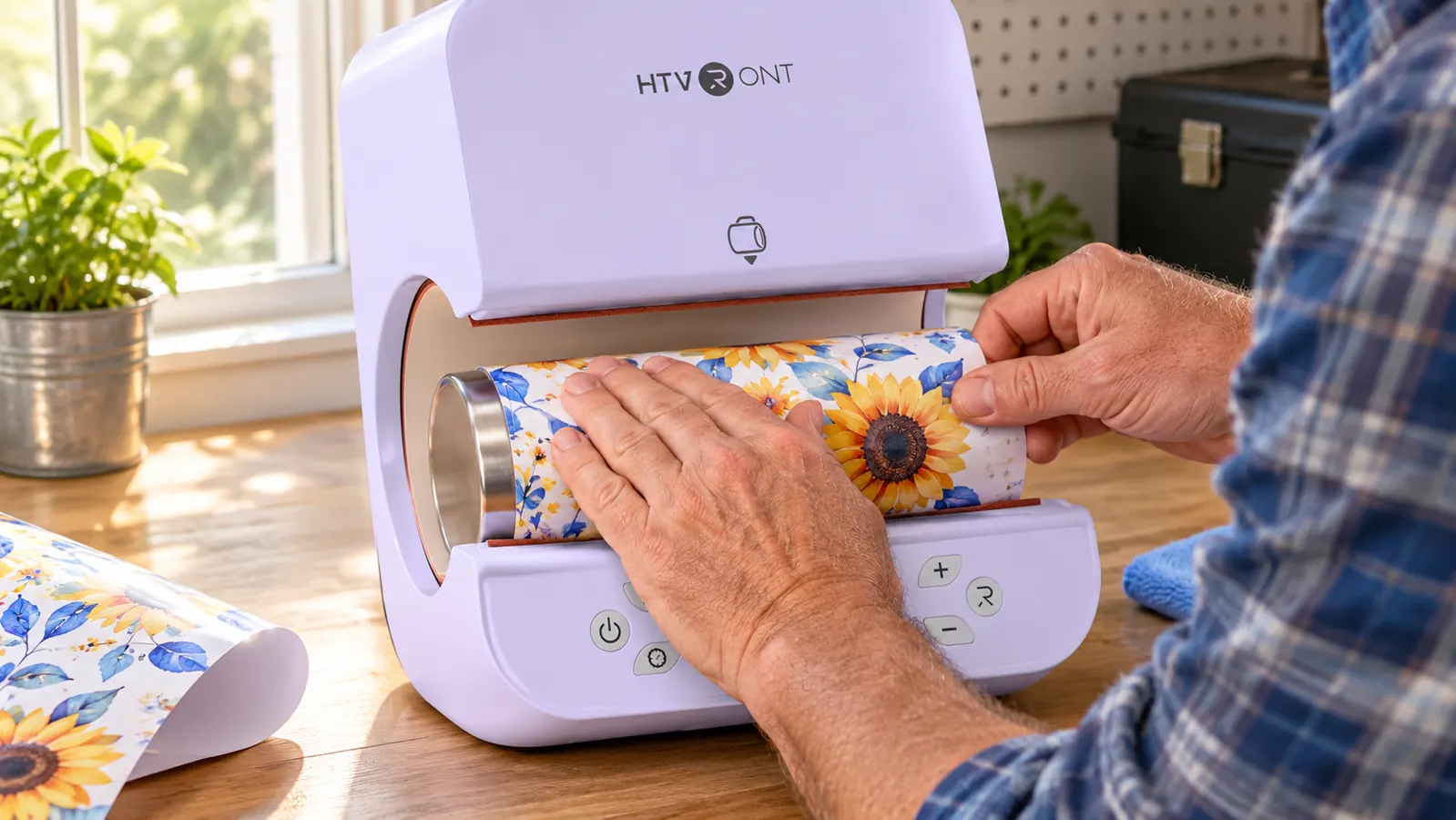
The press wins on one thing above everything else: it does the pressing. I load a wrapped tumbler, close it up, and the machine takes it from there. On the oven, I was the press, which meant my results changed depending on whether I was tired, whether Sal was telling me about the mail, and whether the wrap puckered at the seam. The press took me out of the equation. That turned out to be the whole ballgame.
Temperature is the second win. The machine runs from 210 up to 390 degrees, and once I found the number that works for a given blank and paper it stays found. Same for the time. I press a batch of teacher tumblers at eleven at night after a long Saturday and they come out looking like the ones I did at nine in the morning with coffee in my hand. Consistency is not glamorous. It is the difference between a five star review and an email asking for a refund.
Finding those numbers took a week I would like back. I started at 360 degrees for 60 seconds because a video told me to, and the paper browned at the edges on a white 20 oz blank. So I went cooler and shorter, and the image came out flat and faintly washed. What finally worked on that blank with that paper was slower and a little cooler than the video said, and the machine lets me set it and walk away instead of standing there watching a timer. If you are just starting, write your settings on a strip of masking tape stuck to the side of the machine. Mine has six lines on it now, one for each blank I keep on the wire shelf.
The small stuff adds up too. One click starts a cycle, so I am not standing there holding anything down. There is a button marked R that halts the heating and releases the heat pad right away, and I use it more than I expected, usually when I have mis-taped a seam and want the blank out before the image sets. And there is no shrink wrap in the house anymore. No sleeves, no tongs, no wrestling a hot tube of paper while the dog supervises. Paper and tape. That is the whole consumable list. I bought a pack of paper in January and I am not halfway through it.
Physically it is a small machine. Twelve point nine inches long, ten point nine wide, six point three tall, and 4.92 kg, so it lives on the folding table and moves to the shelf when I need the table for folding shirts. The shell is ABS. It draws 600 watts at 120 volts and has never tripped the circuit in that bedroom, which is more than I can say for the space heater Sal used to run in there. One year warranty, and I have not had to use it.
A concrete example, because numbers beat adjectives. In November a teachers group ordered eighteen tumblers with the school mascot on the front and a name on the back. In the oven that order would have eaten a weekend and I would have thrown away three blanks relearning the wrap. I pressed all eighteen on a Sunday afternoon with the football game on the radio and did not lose one. I am not a better printer than I was two years ago. I am the same printer with a machine that holds the temperature while I drink a coffee.
The oven made me the machine. The press let me be the person who checks the order and drives it to the post office.
Where the Convection Oven Wins
Now the other side, because the oven is not a punchline. It is faster when you have volume, and it is the only one of the two that does not care what shape you hand it. When a team mom needs six tumblers by Friday, I cannot press six at once. In the oven, six wrapped blanks go in together and come out together. That is a real advantage and anyone who tells you otherwise is selling something.
The oven also takes the jobs the press cannot touch. My press is built for drinkware from 2.9 to 3.2 inches across, between 280 ml and 850 ml, which is 10 to 30 oz. That covers most tumblers and a good many glass cans. It covers nothing else in my house. Mugs with handles, ornaments, keychains, my neighbor's ceramic tile project, the little photo slates I made for Mother's Day, all of that is oven work or it is no work at all. If your orders wander off the drinkware shelf, the press has nothing to say about them.
If the oven is already in your kitchen, the entry cost is a baking tray and a roll of wrap. For somebody testing whether sublimation is even for them, that is the sensible first step. I would not tell a person to buy a machine before they have made ten tumblers and decided they like the work. The machine will still be there in March.
The catch is that the oven is honest about your technique in a way that stings. Heat moves around inside it, so the blank on the top rack and the blank on the bottom do not get the same treatment. Paper lifts, wrap puckers, and you end up with a ghost of a logo that looks like it was printed in 1978. I lost more blanks in six months of oven work than I have in two years of pressing. That is not a knock on the oven. It is a knock on me, using an oven as a press.
October of my first year I did twelve mugs for a neighbor's retirement party. I wrapped all twelve, set them on two racks, and let them go. Eleven came out fine. The one directly under the element came out with the face faded to a pale gray and the handle just soft enough that I did not trust it. I remade that one at nine the night before the party and hand delivered it, and she never knew the difference. But I knew. That is the kind of thing that keeps you up at eleven, wondering what else you sent out the door.
There is the kitchen part too. Shrink wrap smells like hot plastic, which is exactly what it is, and my husband did not enjoy the three weeks when I was baking tumblers next to the chicken. The press runs in the spare bedroom with a window fan and nobody notices. If your kitchen is where the family gathers, that matters more than any spec sheet.
If your orders are all drinkware, price out the press before your next batch
210 to 390 degrees, 280 ml to 850 ml, 2.9 to 3.2 inches across, one click per tumbler. That range covers most of what a teacher or a team is going to order, and it does it the same way every cycle.
Amazon Check Today's Price on Amazon →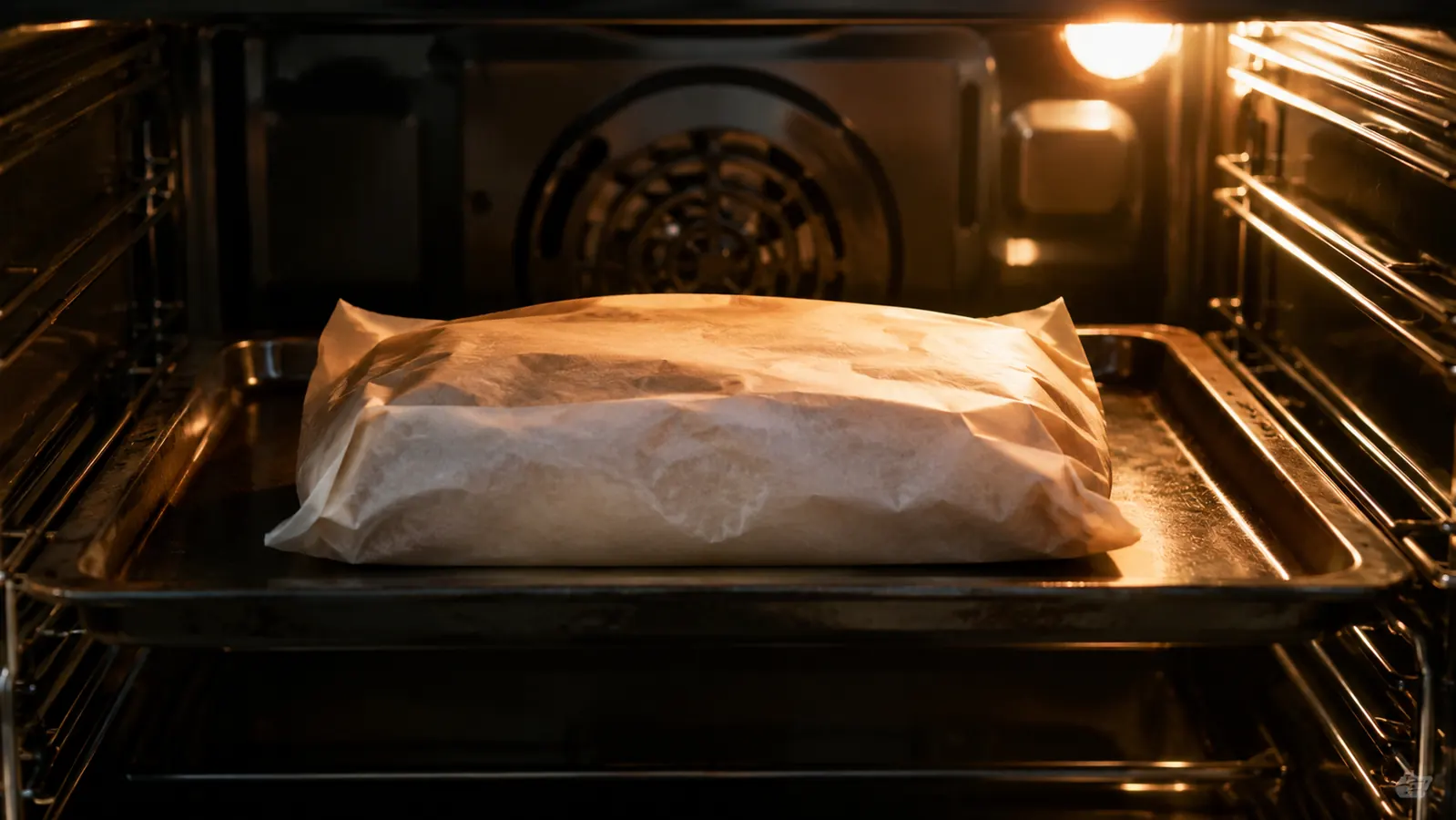
Who Should Buy Which
Buy the HTVRONT press first if your orders look like mine. Teacher tumblers, team gear, holiday mugs, the same 20 oz blank over and over with a different name on it. That is what the machine is built for. You load it, you press a button, you take it out, you do the next one. Ten in a row look like ten in a row, and repeat customers are how this stays a side business instead of a hobby with a shelf of rejects.
Stay with the oven if your work is mixed. Mugs with handles, glassware, tiles, ornaments, anything wider than 3.2 inches. The press cannot help you and the oven can. Same advice if you are three weeks in and unsure. Bake a dozen blanks, sell them, find out whether you enjoy the work before you spend anything on a machine. That is not a dodge. It is the order I wish I had done it in.
Most people I know end up with both, and that is where I landed. The press does the drinkware, which is most of what I sell. The oven stays for the odd jobs and for the one week a year when a Little League team wants two dozen tumblers by Saturday. That week the press runs until midnight and the oven keeps going next to it, and Sal bags while I tape. I also learned to plug them into different circuits. The first fall I ran both at once on the same breaker, the lamp in the press room went out mid cycle and I had to explain to a man holding a tray of hot blanks why we were suddenly in the dark.
One thing matters more than either machine, and I will say it plainly. Your printer. I run one Epson EcoTank ET-2800 that has only ever had sublimation ink in it, and no press on earth fixed my color. If your prints look muddy, fix the profile before you blame the heat. I spent a month blaming a machine that was doing exactly what I told it to do.
And whatever you buy, get a cheap infrared thermometer and test on a blank you do not care about. The press gives you a number on a screen. The oven gives you a guess and a smell. Neither one is a substitute for one ruined tumbler that teaches you what 45 seconds too long looks like. I keep a shelf of those. Sal uses them for his coffee and says they have character.
If you are deciding this week, here is my order of operations. Ten blanks through the oven first, to see whether you like the work. Then the press, once drinkware becomes the thing people ask you for. Then keep the oven, because the weird jobs never stop and you will want it back.
The press is the one I would buy again tomorrow
If drinkware is what you sell, start here. 2.9 to 3.2 inches across, 10 to 30 oz, one click per tumbler, and a year of warranty behind it.
Amazon Check Today's Price on Amazon →